
BMEssentia Platform / Courses / Rehabilitation Engineering
Course: Translational & Clinical Technologies
Rehabilitation Engineering
Imagine creating technologies that empower people with disabilities to live more independently, from robotic exoskeletons that help individuals walk again to assistive devices that restore communication and control. This is the transformative field of Rehabilitation Engineering. In this course, you'll explore how engineering principles are applied to improve the lives of individuals with disabilities, developing solutions that bridge the gap between physical limitations and enhanced mobility, function, and quality of life. Each chapter takes you through essential areas like assistive.
14 chapters. Online and self-paced, in English, on the BMEssentia Platform.
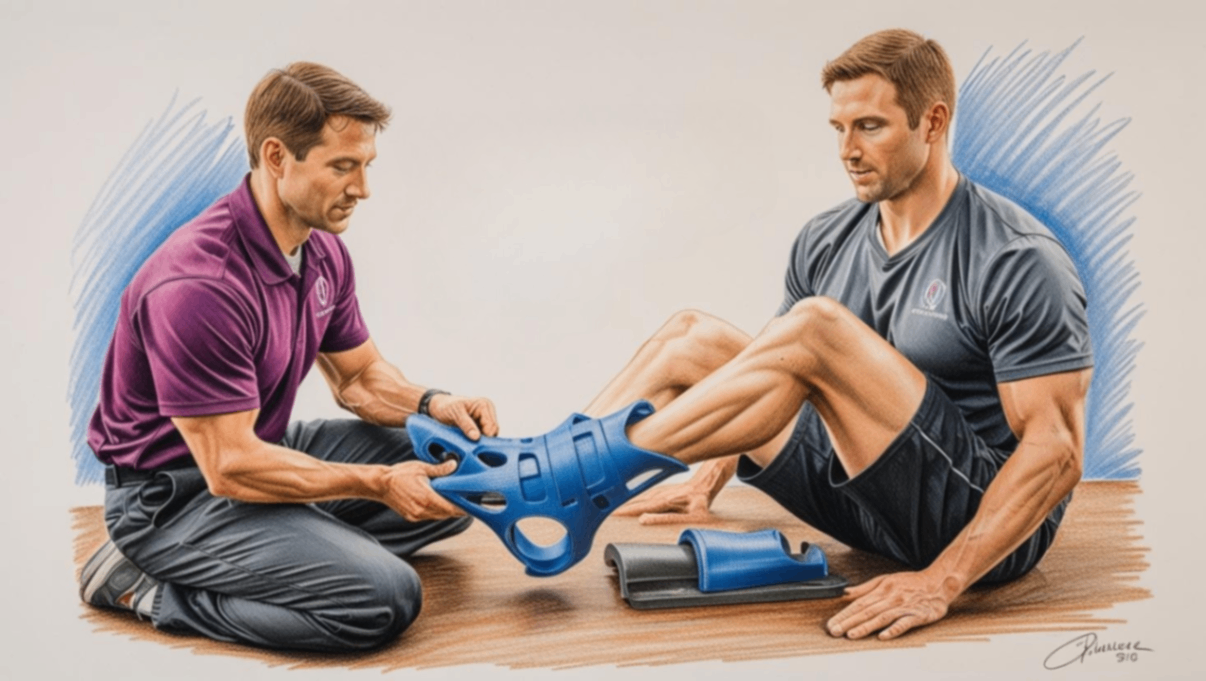
What you will learn
- Assistive Technology Development: Understand the design and functionality of mobility, communication, and sensory aids, enhancing accessibility for diverse needs
- Prosthetic and Orthotic Design: Master techniques for creating prosthetic limbs and orthotic devices that support or replace lost functions.
- Biomechanics of Movement: Learn how movement science underpins rehabilitation technologies, from gait analysis to ergonomic design.
- Rehabilitation Robotics: Explore how robotic systems assist in therapy, enabling recovery of motor function for patients with neurological or physical impairments.
- Neuromuscular Rehabilitation: Gain insights into electrical stimulation and braincomputer interfaces that help restore movement and control.
- Human-Machine Interface Integration: Develop skills in designing interfaces that improve communication and interaction between patients and rehabilitation devices.
- Sensory Rehabilitation Techniques: Discover technologies that support visual and hearing impairments, including advanced prosthetic and sensory substitution devices.
- Cardiovascular and Pulmonary Rehab Tools: Learn about devices and techniques that assist in rehabilitation for patients with heart and lung conditions.
- Pediatric and Geriatric Rehabilitation Engineering: Understand the unique challenges and device adaptations for young and elderly populations.
- Outcome Measurement and Evaluation: Master methods for evaluating the efficacy of rehabilitation devices, ensuring they meet safety and functional standards.
Modules
- Introduction to Rehabilitation Engineering
- Assistive Technology Devices
- Prosthetics and Orthotics
- Rehabilitation Robotics
- Neuromuscular Rehabilitation Technologies
- Sensory Rehabilitation Engineering
- Human-Machine Interfaces (HMI) in Rehabilitation
- Biomechanics of Rehabilitation
- Rehabilitation for Neurological Conditions
- Rehabilitation for Musculoskeletal Disorders
- Pediatric Rehabilitation Engineering
- Geriatric Rehabilitation Engineering
- Outcome Measurement and Evaluation in Rehabilitation
- Rehabilitation Engineering for Cardiovascular and Pulmonary Conditions
More courses
- Bio-Mechanics12 chapters
- Bio-Nanotechnology14 chapters
- Biomaterials14 chapters
- BioStatistics14 chapters
- Cell and Tissue Engineering14 chapters
- Chemistry of Life12 chapters
Learn it properly, inside the Platform
22 courses, the 69-device library with 13 sections per device, BMEssentials and BMEssence guides and MedTech AI. Start with a 7-day free trial, no card.
Start the 7-day free trial