
BMEssentia Platform / Device library / Blood Gas Analyzer
Device library
Blood Gas Analyzer
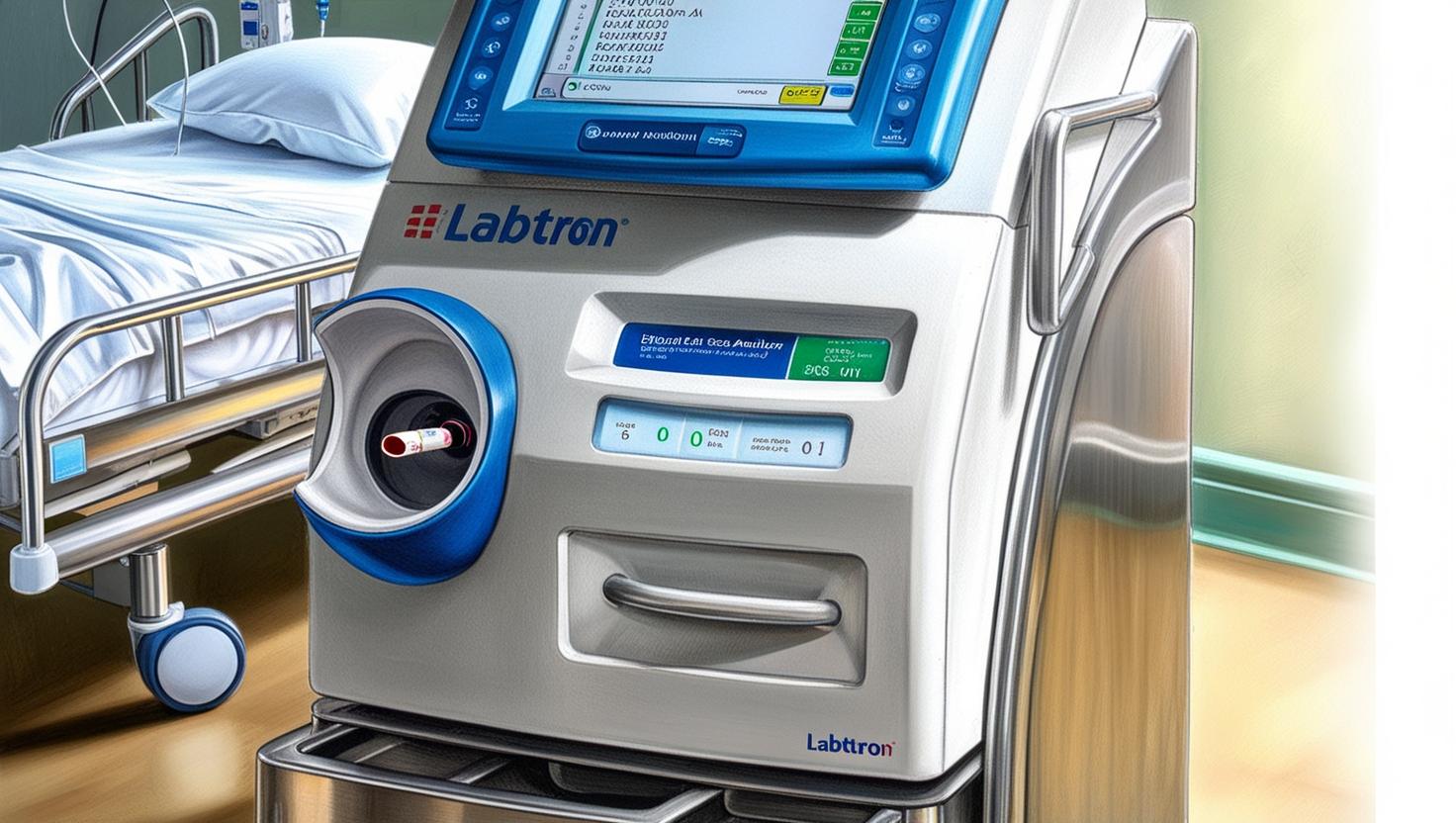
The blood gas analyzer is a critical medical device that measures oxygen, carbon dioxide, pH, and electrolyte levels in blood-providing life-saving insights in seconds! First developed in the 1950s, these machines revolutionized emergency and critical care by helping doctors assess lung function, acid-base balance, and metabolic disorders. Modern analyzers use advanced electrodes and sensors to deliver results with just a few drops of blood, often in operating rooms, ICUs, or ambulances. Surprisingly, some portable models now weigh less than 5 pounds, allowing for rapid testing in remote areas. Blood gas analysis is vital for managing conditions like COPD, diabetic ketoacidosis, or.
The 13 sections, in brief
Short summaries of each section. The full lessons, images and quizzes are in the Platform.
Overview
A woman of thirty-four is in a resuscitation bay, breathing forty times a minute, and nobody can work out why. Her chest is clear. Her chest X-ray is normal. Her oxygen saturation is ninety-eight percent, which is reassuring everybody. She is agitated and somebody has suggested a panic attack.
Operations
Follow the sample, because in this device the sample is where everything happens. It starts with the puncture. An artery, usually at the wrist, entered with a fine needle attached to a pre-heparinised syringe. The pressure in the artery fills the syringe without pulling back, which is itself a confirmation that the sample is arterial.
Importance
The first argument is about a question nothing else answers at the bedside. Oxygen saturation does not answer it. A patient can have a perfect saturation, particularly on supplemental oxygen, while their carbon dioxide climbs and their conscious level falls.
Physics
Physics Involved in the Blood gas analyzer Device: Concept 1, Principle of Blood Gas Measurement and Sensor Architecture A Blood Gas Analyzer (BGA) is a precision-engineered system built to measure the physical chemistry of life in real time.
Features
The oldest and most elegant measurement in the machine. A special glass membrane separates the sample from an internal solution of known, fixed acidity. Hydrogen ions interact with the glass surface on both sides, and the difference in their activity across the membrane generates a voltage.
Applications
Every use of this device is one of four things. Deciding whether somebody needs their breathing supported. Working out where an acid came from. Finding an emergency that nothing else would show. Or checking whether a treatment is working. The core application, and it divides into two types that are managed completely differently.
Physiology
Why the body defends pH so tightly, how carbon dioxide becomes acid, how oxygen is actually carried, how the lungs and kidneys compensate for each other, and why lactate appears. The constraint that makes this measurement urgent. 45, which is an extraordinarily tight range for a biological variable.
Safety
The machine is safe. The sampling hurts, and the results mislead when the sample was mishandled. This is the device in this library where the pre-analytical phase dominates the risk profile completely. An air bubble, a delay, a warm syringe, too much heparin or an accidental venous sample each produces a plausible result that is confidently wrong, and the analyser reports it identically to a correct one.
Advancements
Forget release years. This device has a clear shape: three electrodes were invented, combined into one instrument, and then the entire history has been about making that instrument smaller, faster and closer to the patient. The glass pH electrode was developed, making hydrogen ion activity measurable in a small sample for the first time.
In Research
An accurate machine fed by an uncontrolled process The analytical performance of these instruments is excellent and well characterised. And almost no hospital knows what proportion of its samples arrive with air bubbles, after what delay, at what temperature, from which vessel, and how many results are therefore wrong.
Logistics
An engineer who understands this device is useful. An engineer who understands that the analyser is nearly free and the consumables never stop understands what is actually being sold.
Alternatives
An alternative is not a competing product. It is another way of answering the clinical question, and this device answers several questions at once, which means the alternatives are strong for some and absent for others. Oxygenation has excellent alternatives. Ventilation has partial ones. Acid-base has almost none.
Ethical
This test is ordered casually and it hurts a great deal. Arterial puncture is consistently rated among the most painful procedures performed on ordinary wards, and it is requested in a sentence, frequently by somebody who will not be performing it, sometimes for a number already displayed on the monitor above the bed. The person writing the request does not feel it.
Previous: Autoclave. Next: Blood Pressure Monitor. All 69 devices.
Learn it properly, inside the Platform
22 courses, the 69-device library with 13 sections per device, BMEssentials and BMEssence guides and MedTech AI. Start with a 7-day free trial, no card.
Start the 7-day free trial