
BMEssentia Platform / Device library / Infant Incubator
Device library
Infant Incubator
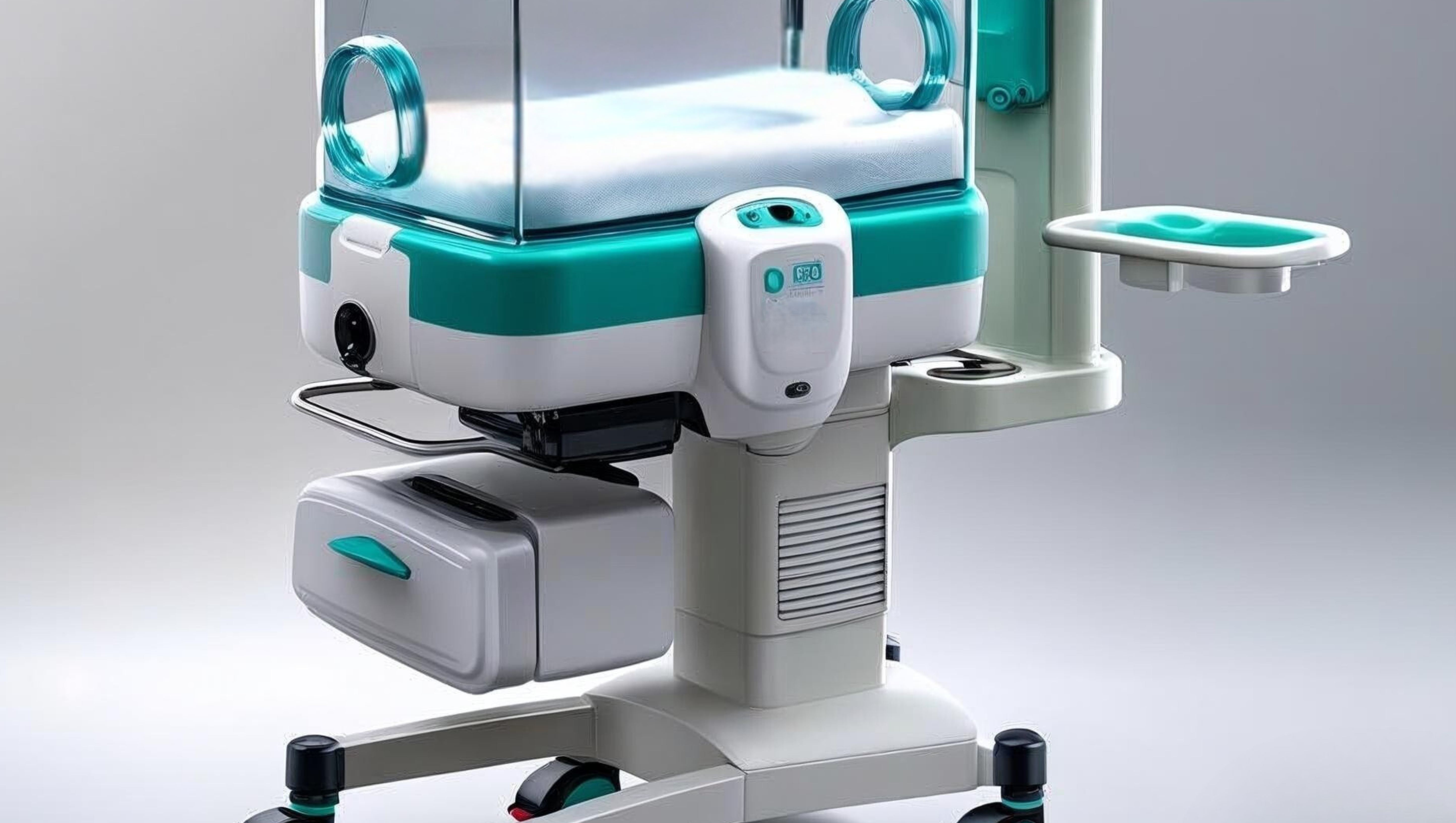
Infant incubators, first introduced in the late 1800s by Dr. Pierre Budin, create a controlled environment to keep premature or sick newborns warm and protected, significantly reducing infant mortality. Early models used simple heated boxes, but today's incubators, like those from Dräger, regulate temperature, humidity, and oxygen levels with precision. Modern systems include built-in monitors for vital signs and noise reduction features to support infant development, making them critical in neonatal intensive care units worldwide.
The 13 sections, in brief
Short summaries of each section. The full lessons, images and quizzes are in the Platform.
Overview
A baby is born at twenty-six weeks. It weighs a little over 800 grams, about the same as a bag of sugar. Its skin is so thin that the blood vessels show through it, and it glistens, because water is already evaporating from it. The delivery room is warm by adult standards. For this baby it is dangerously cold.
Operations
Follow the heat from the machine to the baby, and back. It starts before the baby arrives. The incubator is switched on and warmed in advance, with the air temperature and humidity set according to the baby's expected gestation and weight. A baby placed into a cold incubator loses heat to the air and to the mattress straight away.
Importance
The first argument is about survival, and it is blunt. Cold kills premature babies. Low temperature on admission to neonatal care is consistently linked with higher death rates in premature babies, and the risk rises with every degree below normal.
Physics
Physics Involved in the Infant incubator Device: Concept 1, Thermal Regulation and Environmental Control in the Infant Incubator Inside an infant incubator, the entire world is reduced to one controlled bubble, a synthetic microclimate built to mimic the precision and softness of a mother's womb.
Features
Start here, because the way heat reaches the baby decides a great deal. A heater, usually below the mattress platform, warms air that a fan moves through the compartment. The warm air flows over and around the baby and returns to the heater, with a small amount of fresh air drawn in through a filter.
Applications
Every use of this device is one of four things. Keeping a very premature baby alive through its first weeks. Stabilising a sick newborn of any size. Moving a baby safely between places. Or, deliberately, holding a baby at a temperature that is not normal.
Physiology
How a baby makes heat without shivering, why small babies lose heat so fast, the four ways heat leaves a body, why premature skin leaks water, what cold does to a newborn, and why the environment of a growing brain matters as much as its temperature. Start here, because birth is the moment the problem begins.
Safety
This device protects patients who cannot protect themselves, which means its failures fall on patients who cannot react to them. A premature baby cannot move away from a heater, cannot pull off a blanket, cannot say it is too hot or too cold, and cannot call for help.
Advancements
Forget release years. This device has a strange and moving shape: it began as a box for hatching chickens, was kept alive for years as a public spectacle, and taught medicine several of its hardest lessons about oxygen, touch and what a premature brain needs.
In Research
A mature machine with open questions about how to use it The engineering of controlling temperature in a box is well understood. What is not well understood is how best to use that control for babies whose needs change daily, and how much the environment inside the incubator shapes a baby's long-term development. What humidity, for how long? When to move to a cot? How much noise and light is harmful?
Logistics
An engineer who understands this device is useful. An engineer who understands that an incubator's safety depends on the room, the power and the repair chain as much as on the machine understands what is actually being delivered.
Alternatives
An alternative is not a competing product. It is another way of answering the clinical question, and here the question is simple. How do we keep this baby in the right thermal environment, with the least harm and the most benefit? For many babies, the answer is not an incubator.
Ethical
This device keeps alive babies who, not long ago, would have been left to die. Every advance in keeping premature babies warm and supported has moved the line of survival earlier, and every move has raised new questions about which babies to treat, how far to go, and what life those babies and their families face afterwards. The incubator does not decide these questions.
Previous: Hyperthermia Treatment System. Next: Infusion pumps. All 69 devices.
Learn it properly, inside the Platform
22 courses, the 69-device library with 13 sections per device, BMEssentials and BMEssence guides and MedTech AI. Start with a 7-day free trial, no card.
Start the 7-day free trial