
BMEssentia Platform / Device library / Insulin Pump
Device library
Insulin Pump
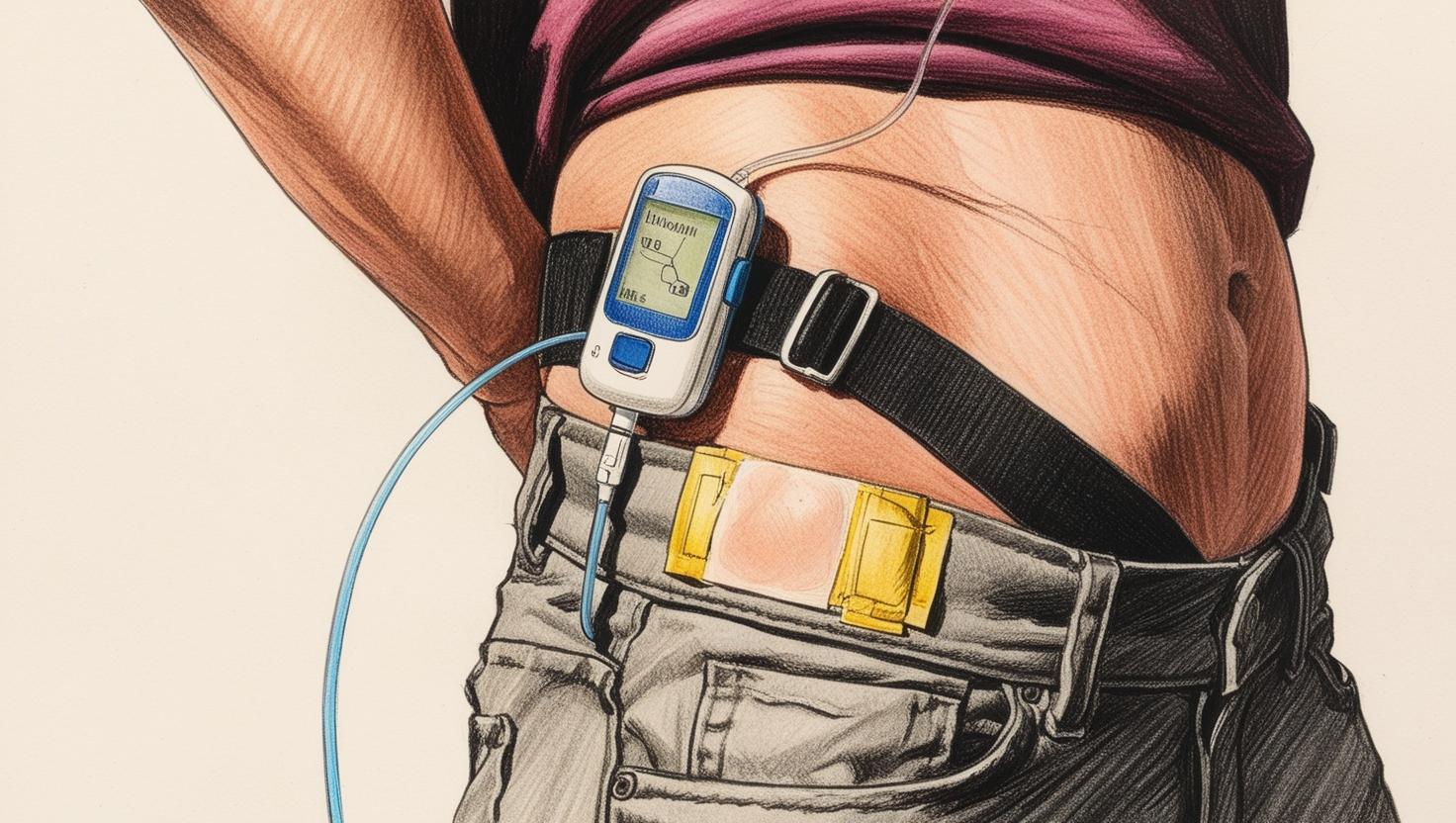
Insulin pumps, introduced in the late 1970s, revolutionized diabetes management by delivering precise insulin doses continuously, mimicking a healthy pancreas. Early models were bulky, backpack-sized devices, but today's pumps are as small as a pager and can sync with smartphones for real-time glucose monitoring. Some modern pumps even use AI to predict blood sugar trends and adjust insulin automatically. These devices have reduced the need for multiple daily injections, improving quality of life for millions with diabetes.
The 13 sections, in brief
Short summaries of each section. The full lessons, images and quizzes are in the Platform.
Overview
A boy of fourteen is asleep. It is ten past three in the morning and his blood glucose is falling. Nobody is awake. He has no symptoms because he has had diabetes for nine years and the warning signs he used to get, the sweating and the shakiness, stopped arriving somewhere around year six. His body no longer tells him.
Operations
It starts in a reservoir inside the pump, holding roughly three days' supply. The user fills it from a vial, or loads a pre-filled cartridge. Then a motor drives a plunger. A stepper motor turns a lead screw which advances the plunger by a precisely known distance. Distance is volume, and volume is dose.
Importance
The first argument is about what type 1 diabetes actually is. The pancreas has stopped producing insulin entirely. Not reduced, not resistant. Gone, destroyed by an autoimmune process, permanently. Which means every unit of insulin that person will ever have must be decided by them, or by a device, for the rest of their life.
Physics
Physics Involved in the Insulin pump Device: Concept 1, Closed-Loop Delivery Mechanism and System Architecture The insulin pump is a compact, fully automated biochemical regulator, a mechanical pancreas designed to maintain blood-glucose equilibrium by continuously monitoring, computing, and delivering precise micro-quantities of insulin into subcutaneous tissue.
Features
The delivery mechanism, and why there is no flow sensor Start here, because it explains a class of failure. A stepper motor turns a lead screw. The screw advances a plunger into a reservoir by a precisely known distance. Which produces extraordinary precision at very small volumes. A basal rate of a fraction of a unit an hour is delivered as tiny pulses every few minutes.
Applications
The core indication and effectively the whole market. The pancreas produces no insulin at all. Every unit for the rest of that person's life is a decision made by them or by a device. People with frequent or severe hypoglycaemia, which is the strongest indication of all.
Physiology
What the device is trying to replace: an organ that senses glucose continuously and responds within seconds, delivering insulin directly into the portal circulation. And what it actually does: deposit insulin into fat, where it is absorbed slowly, guided by a sensor reading a compartment that lags behind the blood.
Safety
This device has a safety profile unlike almost anything else in the library, and the reason is the drug. Insulin has no antidote. An overdose cannot be reversed, only outrun with glucose. And this device delivers it automatically, in tiny amounts, hundreds of times a day, to a person who is frequently asleep, with nobody supervising and no clinician in the building.
Advancements
Forget release years. This device has an unusual shape: the pump barely changed for decades and everything that mattered happened around it. Somebody built a portable pump to deliver insulin continuously. Early devices were large, worn on a backpack frame, and they proved the concept: continuous subcutaneous delivery worked.
In Research
The thing this field did that no other did Patients built the therapy before the industry shipped it. People with type 1 diabetes reverse-engineered pump protocols, wrote closed-loop algorithms, distributed them free, used them on themselves and their children, and collected the data.
Logistics
An engineer who understands this device is useful. An engineer who understands that the pump is a four-year purchase and the consumables are a lifetime subscription understands what is actually being sold. A pump is replaced every four to five years. In that time the user consumes around six hundred infusion sets, six hundred reservoirs, and a hundred and fifty sensors.
Alternatives
An alternative is not a competing product. It is another way of answering the clinical question, and here the question is precise. This person produces no insulin. How do we deliver the right amount at the right time, for the rest of their life, without killing them with too much?
Ethical
Most devices in this library are operated by professionals and raise ethical questions about what is done to a patient. This one raises a different question entirely, and it is one the field has answered badly for decades. This therapy is delivered, twenty-four hours a day, for life, by the person with the disease. The clinician sees them for twenty minutes every three months.
Previous: Infusion pumps. Next: Intra Aortic Balloon Pump (IABP). All 69 devices.
Learn it properly, inside the Platform
22 courses, the 69-device library with 13 sections per device, BMEssentials and BMEssence guides and MedTech AI. Start with a 7-day free trial, no card.
Start the 7-day free trial