
BMEssentia Platform / Device library / Laser Skin Resurfacing System
Device library
Laser Skin Resurfacing System
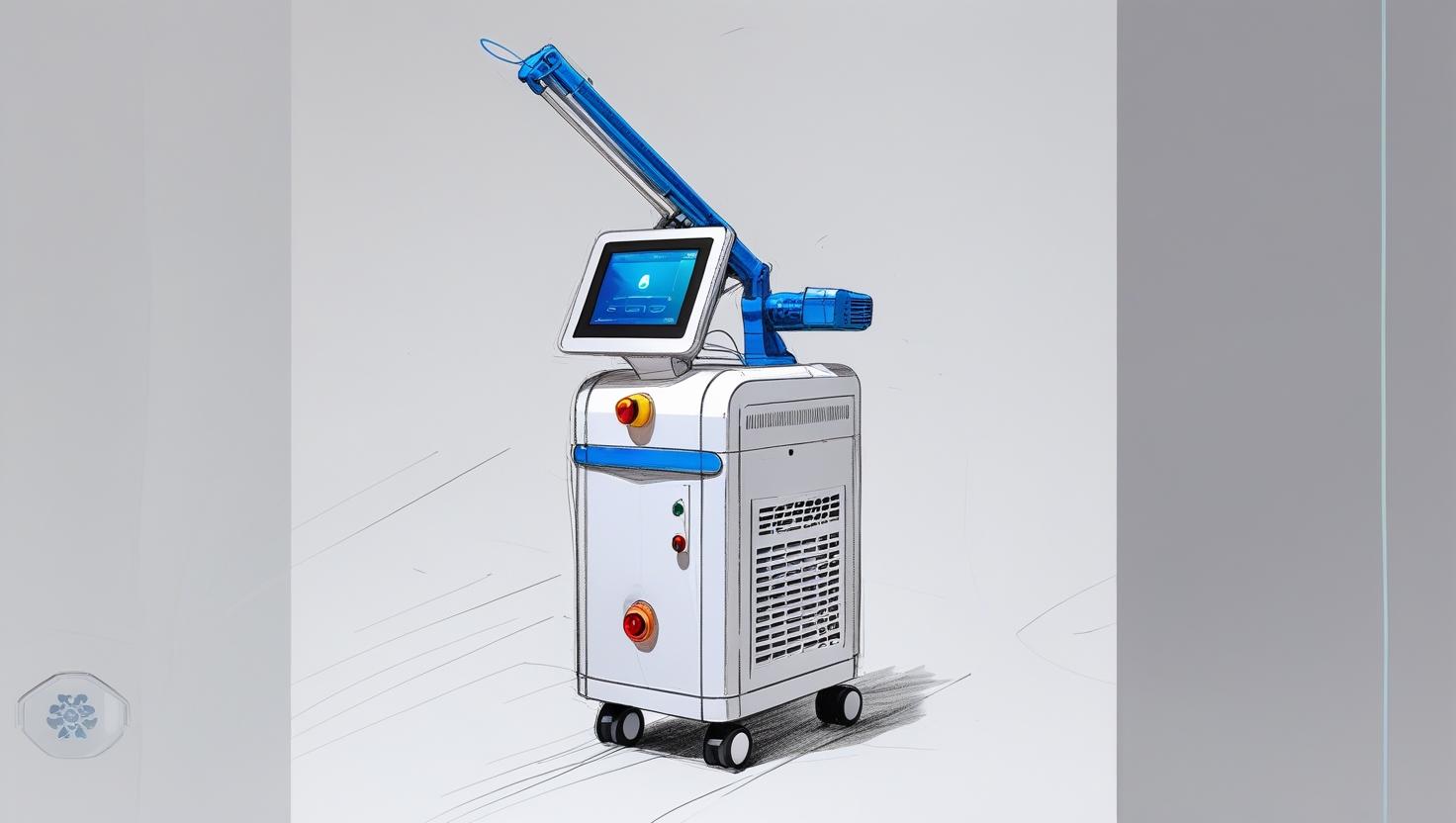
Laser Skin Resurfacing uses focused beams of light to remove damaged skin layers and stimulate collagen production. It helps reduce wrinkles, scars, and blemishes, leading to smoother and younger-looking skin. Different types of lasers are used depending on the skin type and condition being treated. Though it sounds intense, the procedure is often done on an outpatient basis with minimal downtime. Protective eyewear is always required to shield the eyes from laser exposure.
The 13 sections, in brief
Short summaries of each section. The full lessons, images and quizzes are in the Platform.
Overview
A man of twenty-eight sits in a clinic with his chin tipped slightly down. He always sits like that. Four years ago, hot oil from a kitchen accident burned the front of his neck, and the scar that formed as it healed is thick, shiny and tight. When he tries to look up at the ceiling, the scar pulls like a cord and stops him.
Operations
Follow the beam from the machine into the skin, then follow the healing. It starts with the consultation, which is where most of the safety of this device lives. Skin type is assessed, including how the skin reacts to sun and injury. History is taken: cold sores, previous scarring, keloids, recent acne medication, recent tanning, pregnancy, and what the patient expects. Photographs are taken.
Importance
The first argument is about scars that limit lives. Burn scars and other thick scars can tighten across joints and the neck, limiting movement, causing pain and itching, and marking the person visibly for life. Fractional ablative lasers can make these scars softer, flatter and more flexible, improving movement and reducing symptoms.
Physics
Physics Involved in the Laser Skin Resurfacing System: Concept 1, Laser-Tissue Interaction and Controlled Ablation in the Laser Skin Resurfacing System The laser skin-resurfacing system is a precision optical-thermal instrument designed to remodel the skin by vaporizing micro-layers of the epidermis and stimulating new collagen formation beneath.
Features
Start here, because everything depends on what absorbs the light. A laser only affects tissue that absorbs its light. Different wavelengths are absorbed by different substances in the skin: pigment, blood or water. Resurfacing lasers use wavelengths that are absorbed mainly by water, which makes up most of the skin.
Applications
Every use of this device is one of four things. Restoring movement and comfort in scarred skin. Improving scars left by acne or injury. Repairing skin damaged by sun and age. Or opening the skin so that a treatment can reach deeper. The first is medicine in the fullest sense. The others range from medical to purely cosmetic, and the line between them is not always clear.
Physiology
How skin is built, what sun and time do to it, what heat does to tissue, how skin heals, why pigment cells react so strongly, and why some skin scars when other skin does not. Start here, because the laser works by damaging specific layers. The thin outer layer. Its bottom row of cells constantly divides, pushing new cells upward.
Safety
This device creates wounds on purpose, which means its safety is about making sure those wounds heal as planned. Every complication in this device is a version of the same failure: an injury that went deeper, wider or hotter than the skin could recover from, in a person whose healing was not fully understood. Most can be prevented with good patient selection, correct settings, careful technique and aftercare.
Advancements
Forget release years. This device has a clear shape: it started as a way to burn away the whole surface of the skin, and became powerful and safe by learning to leave most of the skin alone. The first lasers were built, and the carbon dioxide laser soon followed, cutting and vaporising tissue with little bleeding.
In Research
A powerful device with soft outcome measures This device is widely used, and many of its results are measured by looking at photographs. Which means some of the most basic questions, such as how much a treatment improves a scar, which settings work best for which skin, and how often complications happen in everyday practice, are harder to answer than they should be.
Logistics
An engineer who understands this device is useful. An engineer who understands that this device is sold mostly into businesses rather than hospitals, and that its market is driven by demand for appearance understands what is actually being bought. Most medical devices are bought because a hospital needs to treat an illness. Resurfacing lasers are often bought because a clinic believes it can sell treatments.
Alternatives
An alternative is not a competing product. It is another way of answering the clinical question, and here the question depends on the problem. Is this a scar, sun damage, a wrinkle, pigment, or sagging? Each has different best answers, and sometimes the laser is not one of them.
Ethical
This device injures healthy tissue, often for appearance, in a setting where treatment is also a sale. That combination creates ethical pressure that most medical devices do not face. The person recommending treatment may benefit financially from it. The patient may be vulnerable to pressure about appearance. The results are judged by eye and appear slowly. And the risks fall more heavily on people with darker skin.
Previous: Laryngoscope. Next: Magnet Controlled Capsule Endoscopy (MCCE). All 69 devices.
Learn it properly, inside the Platform
22 courses, the 69-device library with 13 sections per device, BMEssentials and BMEssence guides and MedTech AI. Start with a 7-day free trial, no card.
Start the 7-day free trial