
BMEssentia Platform / Device library / Magnet Controlled Capsule Endoscopy (MCCE)
Device library
Magnet Controlled Capsule Endoscopy (MCCE)
Magnet-Controlled Capsule Endoscopy (MCCE) is a cutting-edge medical technology that allows doctors to examine the digestive tract using a tiny, pill-sized capsule with a camera-guided by external magnets! Unlike traditional endoscopy, MCCE requires no sedation or tubes, offering a painless alternative for patients. The capsule transmits real-time images wirelessly as it travels through the stomach and intestines, with magnets adjusting its position for optimal views. Developed in the early 2000s, this technology is especially useful for detecting ulcers, tumors, or bleeding in hard-to-reach areas. Some advanced systems even use AI to flag abnormalities instantly. While still evolving.
The 13 sections, in brief
Short summaries of each section. The full lessons, images and quizzes are in the Platform.
Overview
A woman swallows a capsule the size of a large vitamin pill. She lies on a table. Somebody outside the room moves a joystick, and inside her stomach the capsule turns, tilts, and travels along the wall of her stomach, photographing it. Fifteen minutes later they have looked at every part of an organ they have never touched. She gets up and goes to work.
Operations
The patient drinks water to fill the stomach. This matters more than it sounds: a collapsed stomach has walls folded against each other, and nothing can be seen. Filled with water, it becomes an open chamber with the capsule floating in it. The capsule is swallowed. It reaches the stomach in seconds.
Importance
The argument is patient experience, and it is stronger than it sounds. Conventional gastroscopy is unpleasant enough that people avoid it. Not a minor discomfort. A tube past the gag reflex, usually sedation, someone to take you home, and a day off work.
Physics
Physics Involved in the Magnetically Controlled Capsule Endoscopy MCCE device: 1. Magnetism is a fundamental force that allows objects to interact without physical contact. Every magnet creates an invisible magnetic field - a region of space where other magnetic objects experience forces.
Features
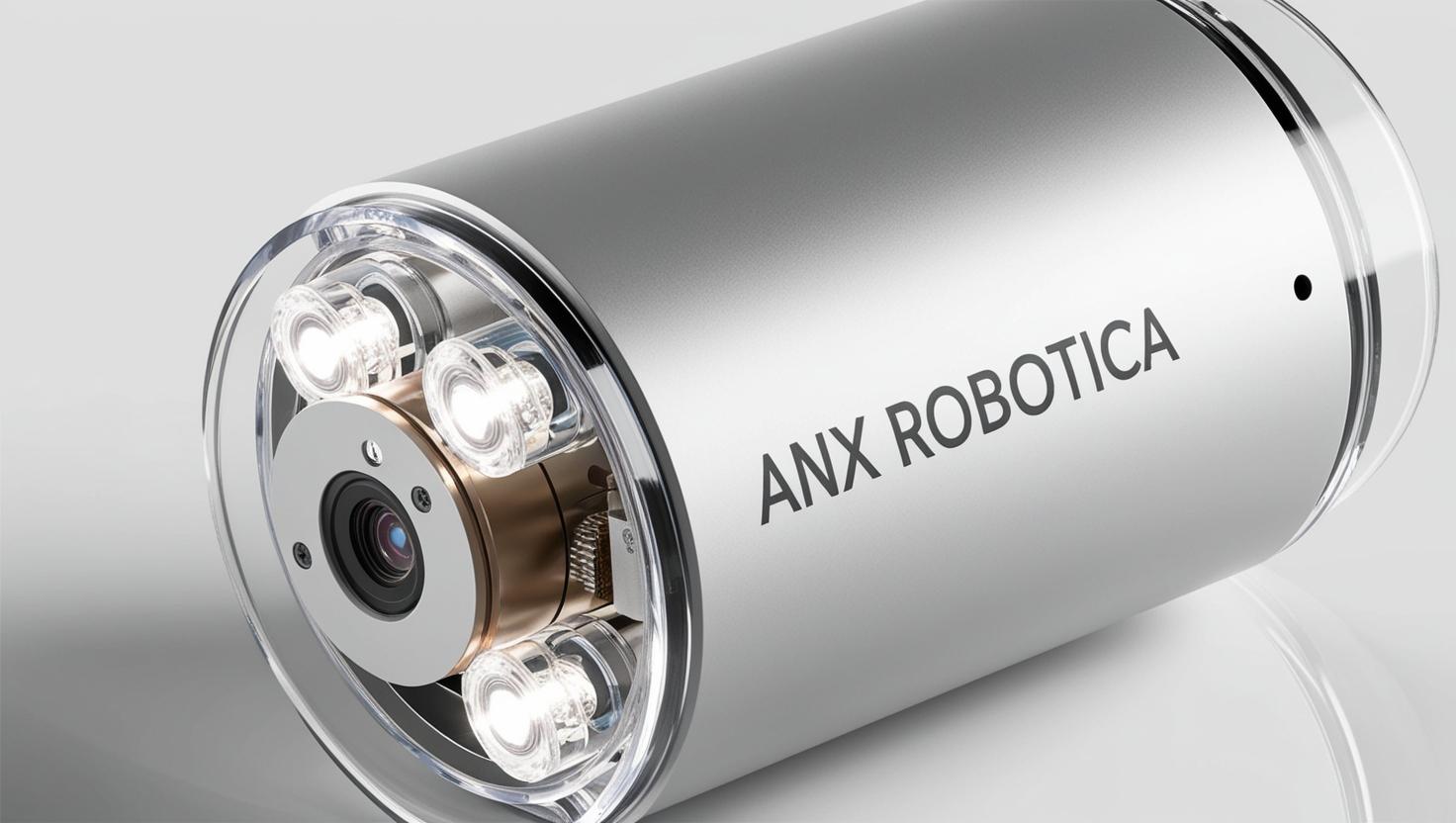
Roughly the size of a large vitamin pill. Inside it, in a space smaller than a thumb joint, sits everything the device needs. A camera, usually at one end, sometimes at both. Small lights around the lens, because there is no light inside a stomach. A battery, which has to last the whole journey.
Applications
The largest use and the one driving the whole technology. In several countries stomach cancer is common, it is curable when found early, and it is usually silent until it is late. Which makes it an obvious candidate for screening. And screening by conventional endoscopy runs into a wall.
Physiology
This device does not treat anything and it does not measure anything physiological. What it does is travel through a working gut, and the gut has its own plans. Every problem in this device is a fight between an operator who wants the capsule to stay somewhere and a digestive system whose whole job is to move things along.
Safety
This is one of the safer devices in the library. No anaesthetic, no sedation, no instrument pushed into anybody. Which creates its own problem. A test that feels like swallowing a pill gets offered casually, and the two things that can genuinely go wrong, a stuck capsule and a missed lesion, both arrive long after the patient has gone home.
Advancements
A camera small enough to swallow. The capsule endoscope arrived and it worked well in the small bowel, which no tube could reach. And badly in the stomach, because a capsule in an open chamber just lies there. So somebody added a magnet and put another one outside. A wandering camera became a driven one.
In Research
The whole case for this device rests on one number that nobody has. How many stomach cancers does it miss? Not in a careful study where the operators were experts and the patients were slim and everybody had drunk exactly the right amount of water. In a real screening programme, done at pace, by ordinary staff, on ordinary people.
Logistics
A moderate piece of equipment and a capsule per patient that is thrown away. Which puts this device in a specific commercial position. It is trying to replace an examination that hospitals already own the equipment for. The gastroscope is bought, the room exists, the staff are employed.
Alternatives
The goal is not to look at a stomach. It is to find disease early in people who would otherwise present late. Which changes the comparison completely. A test that is worse but that people accept can find more disease than a better test they avoid. This device is not competing on quality. It is competing on whether anybody turns up.
Ethical
This device is comfortable, safe and easy to offer. Which is exactly what makes the central question awkward. Is it acceptable to give somebody a worse test because they will agree to it? That is the whole ethical shape of this device. Everywhere else in medicine we argue about whether patients get the best available option.
Previous: Laser Skin Resurfacing System. Next: Magnetic Resonance Imaging (MRI). All 69 devices.
Learn it properly, inside the Platform
22 courses, the 69-device library with 13 sections per device, BMEssentials and BMEssence guides and MedTech AI. Start with a 7-day free trial, no card.
Start the 7-day free trial