
BMEssentia Platform / Device library / Cardiac Pacemaker
Device library
Cardiac Pacemaker
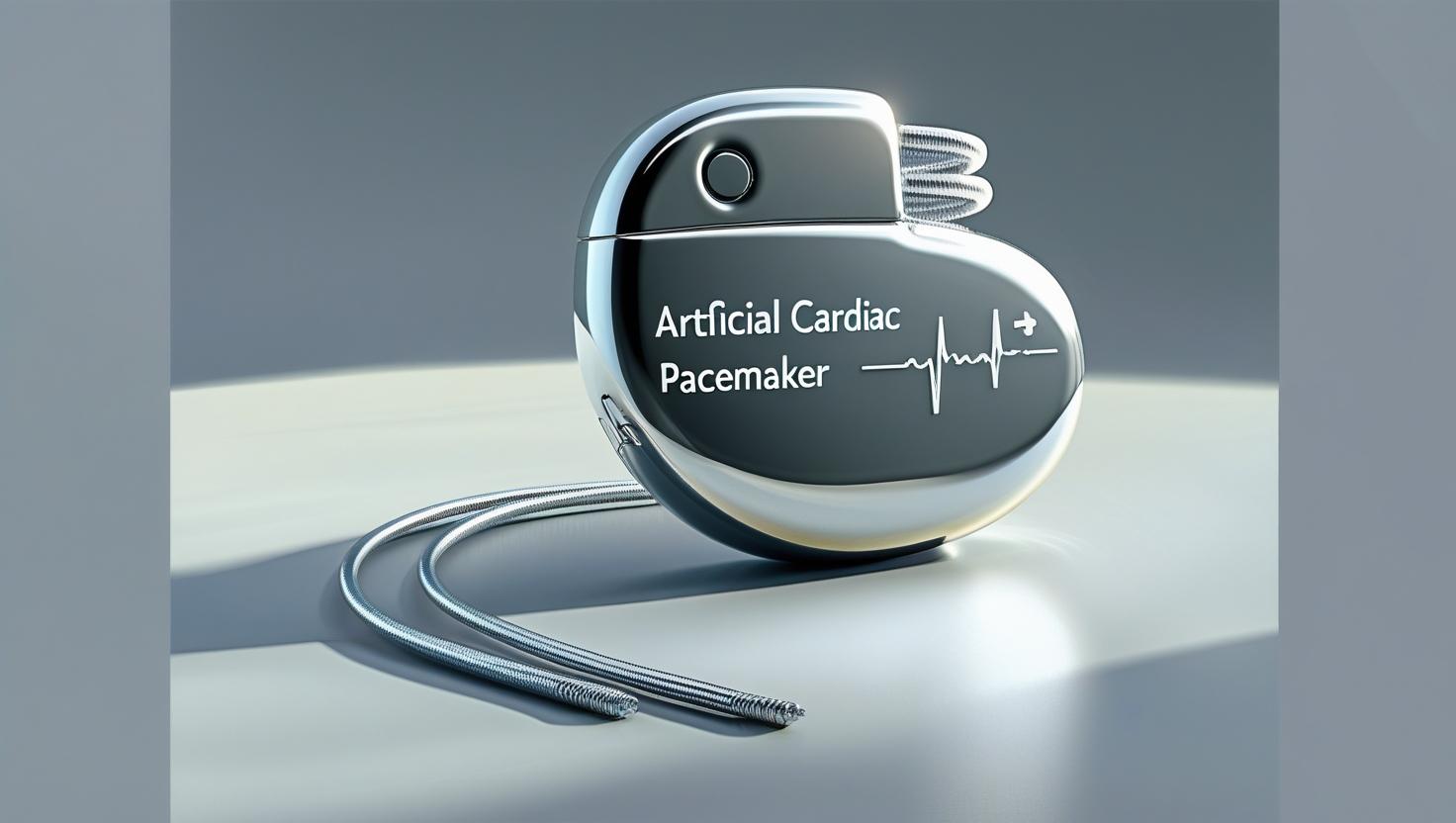
The cardiac pacemaker, first implanted in 1958, was a groundbreaking device that used electrical pulses to regulate heartbeats, saving millions from life-threatening arrhythmias. Early models were bulky, externally powered, and lasted only a few years, but today's pacemakers are as small as a AAA battery and can last over 15 years. Modern devices, like those from Medtronic, can be MRI-compatible and adjust heart rates based on activity levels, with some even monitored remotely via smartphone apps, enhancing patient freedom and care.
The 13 sections, in brief
Short summaries of each section. The full lessons, images and quizzes are in the Platform.
Overview
A man is eighty-two and he keeps falling over. Not tripping. Falling. He is standing at the kitchen sink and then he is on the floor, and he cannot tell you what happened in between because nothing happened in between. There was no dizziness, no warning, no sensation. There was the sink, and then there was the floor, and somewhere in the gap his heart stopped for nine seconds.
Operations
Follow the signal. It explains the whole device. Start in the patient's own heart. In the wall of the right atrium sits a cluster of specialised cells called the sinus node. These cells leak ions inward between beats, drifting toward threshold, and when they reach it they fire. Then they reset and drift again. Nobody tells them to. It is a clock built out of membrane.
Importance
The first argument is the simplest in this entire library. Before pacemakers, complete heart block was a death sentence with a timeline measured in months. Patients collapsed repeatedly, unpredictably, and eventually did not get up. There was no treatment. Drugs that speed the heart helped briefly and then failed.
Physics
Physics Involved in the Cardiac pacemaker Device: Concept 1, Pulse Generation Circuitry and Myocardial Excitation Sequence A cardiac pacemaker is a precision bioelectronic system designed to replicate and stabilize the heart's natural pacing rhythm by generating and delivering controlled electrical impulses to the myocardium.
Features
Start here, because the box is extremely reliable and the wire is not. A heart beats roughly a hundred thousand times a day. Every one of those beats flexes the lead where it sits in the heart, and every breath flexes it where it passes under the collarbone.
Applications
The clearest indication in cardiology and the one that built the device. The atria beat normally. Nothing gets through to the ventricles. The ventricles fall back on their own escape rhythm, which is slow, unreliable, and can stop entirely. Sudden collapse with no warning at all. Not dizziness building to a faint.
Physiology
What the body does to the device: it grows scar around the electrode, it changes the signal the device is trying to sense, and it flexes the lead a hundred thousand times a day. What the device does to the body: it activates the heart from the wrong place, which over years changes the shape of the muscle itself.
Safety
This device has an unusual safety profile and it is worth stating up front. The generator almost never fails. Modern pacemakers are among the most reliable pieces of engineering anybody has put inside a human body. Which means essentially every serious problem in this device comes from three places: the wire, the pocket, and a decision somebody made in a clinic. The box is not the risk. Everything attached to it is.
Advancements
Forget release years. This device has a shape, and it is the clearest in the library: it began by keeping people alive, spent decades learning it was harming them, and has spent the last of them trying to pace less. Somebody showed that an electrical impulse could drive a stopped heart. The first devices were external, mains powered, and delivered pulses through the chest wall that were extremely painful.
In Research
The lesson this device taught, at enormous cost Right ventricular pacing was known to produce abnormal activation from the beginning. Anybody could see it on an ECG. It was assumed to be a cosmetic finding, because the patients were alive and the alternative was death.
Logistics
An engineer who understands this device is useful. An engineer who understands that the implant is the beginning of a thirty-year relationship, not a transaction, understands what is actually being sold. A patient implanted at sixty-five will have three or four generator replacements, thousands of follow-up checks, years of remote monitoring transmissions, and possibly a lead revision.
Alternatives
An alternative is not a competing product. It is another way of answering the clinical question, and the question here is unusually narrow. This heart is beating too slowly or in the wrong order, and it is causing harm. What else could fix that? The honest answer is that for the main indication, almost nothing does.
Ethical
This device raises a question no other machine in this library raises quite so directly. A ventilator can be switched off and wheeled away. A dialysis machine is somewhere else between sessions. This is sealed inside somebody's chest, working every second, for the rest of their life, and it will still be working after they stop.
Previous: Cardiac Monitor. Next: Cardiopulmonary Bypass Machine. All 69 devices.
Learn it properly, inside the Platform
22 courses, the 69-device library with 13 sections per device, BMEssentials and BMEssence guides and MedTech AI. Start with a 7-day free trial, no card.
Start the 7-day free trial