
BMEssentia Platform / Device library / Centrifuge
Device library
Centrifuge
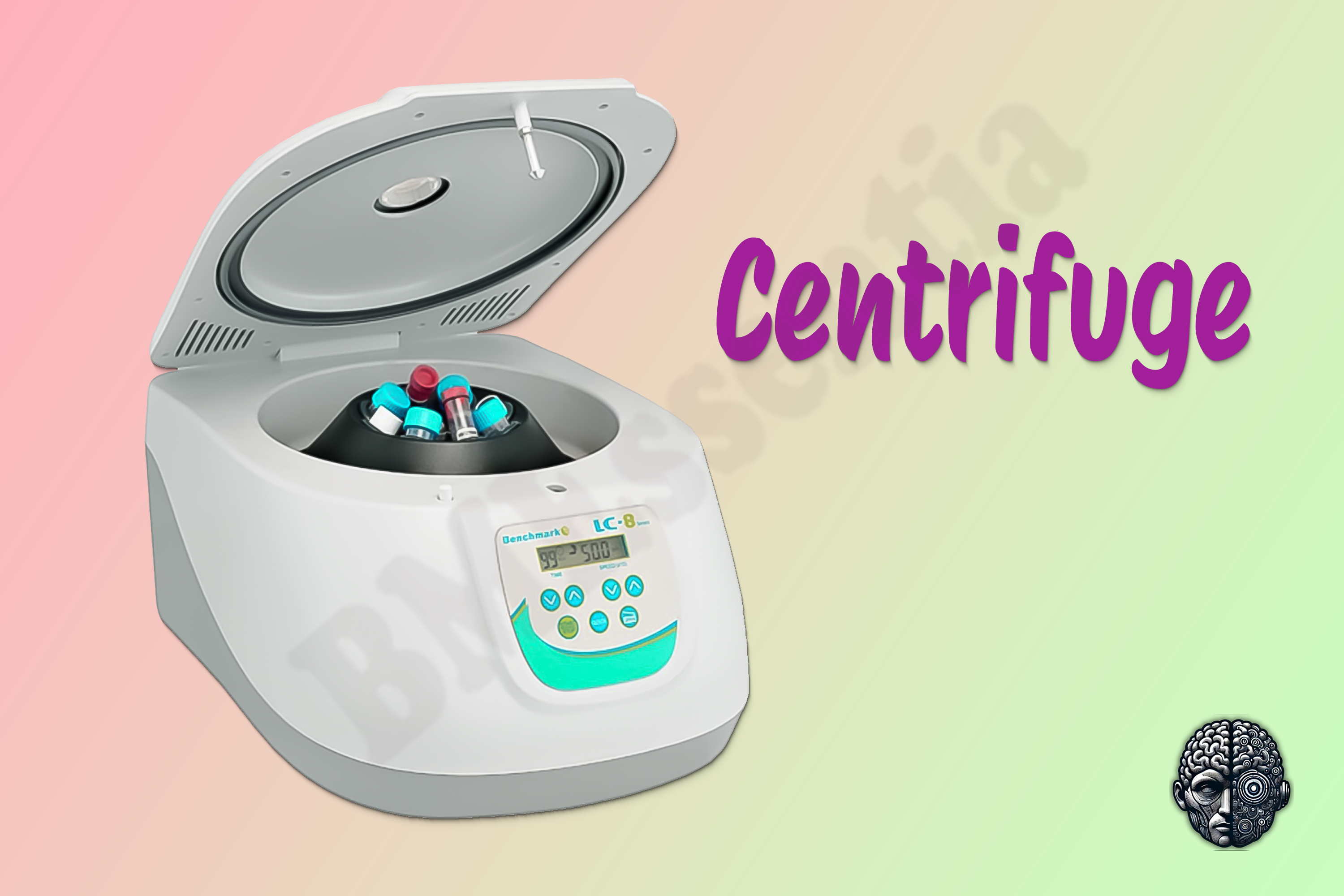
The centrifuge is an essential laboratory instrument that separates substances by density using high-speed rotation. Modern versions achieve speeds up to 150,000 RPM while maintaining precise temperature control for sensitive samples. In hospitals, they quickly process blood into components for transfusions and testing, while research labs use them to isolate DNA and cellular materials. Advanced safety systems now include automatic imbalance detection and secure locking mechanisms. Their applications span from diagnostic medicine to pharmaceutical development and biotechnology. Compact benchtop models have made centrifugation technology accessible to smaller labs. This versatile tool.
The 13 sections, in brief
Short summaries of each section. The full lessons, images and quizzes are in the Platform.
Overview
Alternate Names: Laboratory Centrifuge, Medical Centrifuge, Clinical Centrifuge, Analytical Centrifuge Centrifuge - A laboratory device that separates substances of varying densities within a liquid by spinning them at high speeds, essential for applications in medical, biological, and chemical fields.
Operations
Centrifuges are vital to modern clinical, research, and industrial processes. They are indispensable for separating mixtures, purifying biomolecules, and preparing samples for further analysis. The device's ability to quickly and efficiently separate components of a solution has made it an essential tool in numerous fields.
Importance
Centrifuges are vital to modern clinical, research, and industrial processes. They are indispensable for separating mixtures, purifying biomolecules, and preparing samples for further analysis. The device's ability to quickly and efficiently separate components of a solution has made it an essential tool in numerous fields.
Physics
Physics Involved in the Centrifuge Device: Concept 1, The Principle of Centrifugal Separation and Rotational Dynamics in a Medical Centrifuge A centrifuge is a device that uses rotational motion to separate mixtures based on differences in density.
Features
• Benchtop Centrifuges: These are small, compact centrifuges that fit on a laboratory bench. They are commonly used for routine applications like blood and urine testing. • High-Speed Centrifuges: These machines can achieve speeds of up to 30,000 RPM and are used for more advanced applications, such as isolating subcellular components or purifying DNA.
Applications
Working Premise and Procedure (Step-by-Step) The first step in using a centrifuge is preparing the samples. The user places the material to be separated (such as blood, urine, or cellular suspensions) into specific centrifuge tubes that are compatible with the machine.
Physiology
The centrifuge plays a crucial role in various biological and medical applications, particularly in the study of blood, cells, and bodily fluids. Understanding the anatomy and physiology of the substances being centrifuged is essential to appreciating the device's significance.
Safety
Centrifuges, especially high-speed and ultracentrifuges, must be handled with care due to the forces they generate and the potential hazards associated with improper use. Below are some key safety considerations. One of the most important safety concerns with centrifuges is ensuring the samples are balanced correctly.
Advancements
Centrifuge technology continues to evolve with innovations that improve efficiency, safety, and versatility in both clinical and research settings. Recent advances include automation, enhanced data integration, and novel rotor designs. One of the most significant advances in centrifuge technology is the development of automated systems.
In Research
The Device in Research and Specialized Applications Centrifuges are indispensable in numerous fields of research, from medical diagnostics to molecular biology and environmental science. Centrifuges are central to clinical research, particularly in blood testing, disease diagnosis, and therapeutic monitoring.
Logistics
Centrifuges range in cost from affordable benchtop models to expensive ultracentrifuges, with prices depending on the speed, capacity, and features of the device. The purchase price of a centrifuge is a major consideration for laboratories, hospitals, and research institutions.
Alternatives
While centrifuges are indispensable for many applications, there are alternative methods for separating mixtures in some contexts. Filtration is a mechanical process that separates solid particles from liquids or gases by passing the mixture through a filter.
Ethical
Ethical Considerations and Future Directions As centrifuge technology evolves, several ethical and future considerations arise, particularly regarding access to the technology, environmental impact, and the role of automation. In low-resource settings, access to high-quality centrifuges is often limited due to cost and infrastructure constraints.
Previous: Cardiopulmonary Bypass Machine. Next: Cerebrospinal Fluid (CSF) Shunt System. All 69 devices.
Learn it properly, inside the Platform
22 courses, the 69-device library with 13 sections per device, BMEssentials and BMEssence guides and MedTech AI. Start with a 7-day free trial, no card.
Start the 7-day free trial