
BMEssentia Platform / Device library / Cerebrospinal Fluid (CSF) Shunt System
Device library
Cerebrospinal Fluid (CSF) Shunt System
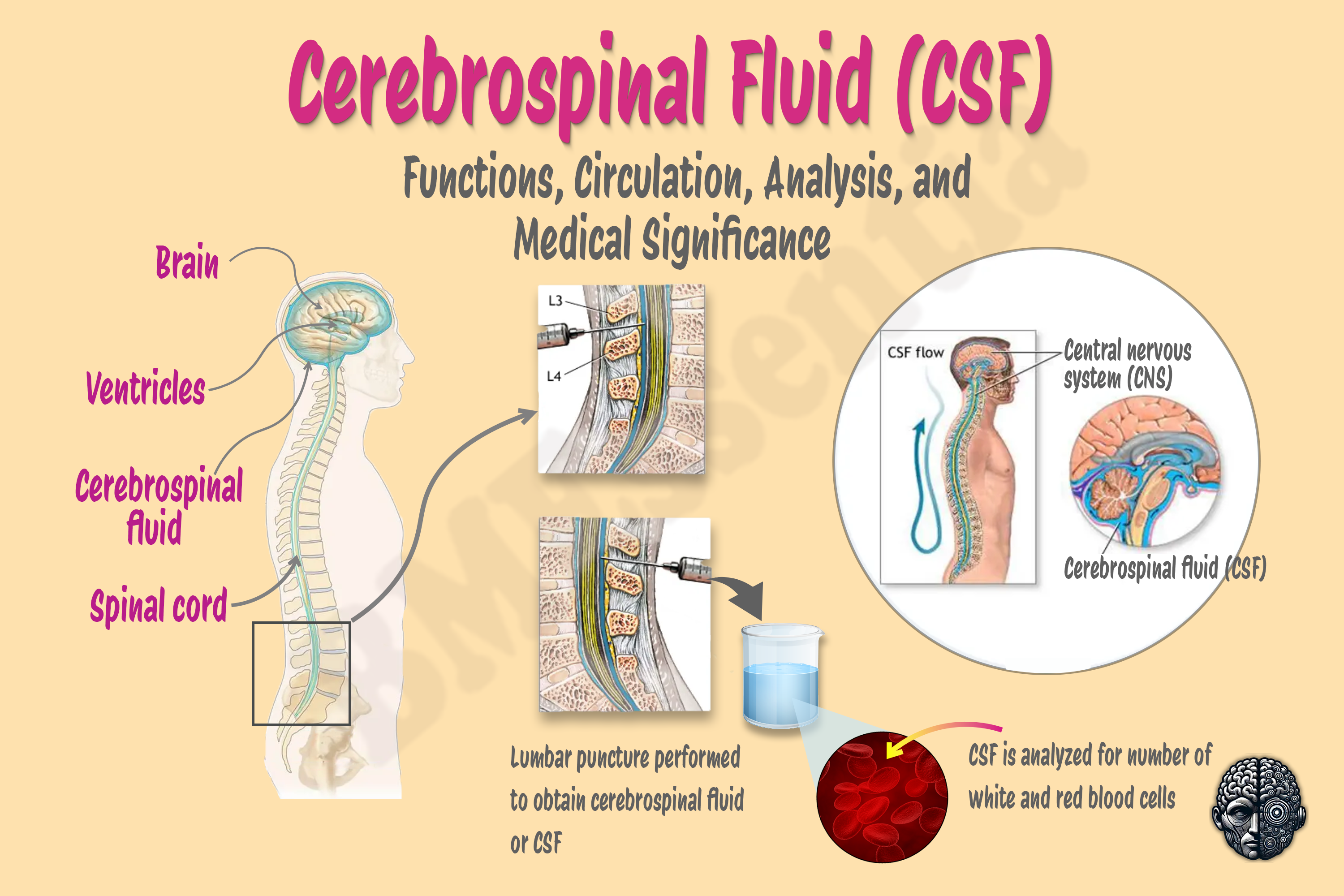
A Cerebrospinal Fluid (CSF) Shunt System is a life-saving device used to treat hydrocephalus-a condition where excess fluid builds up in the brain. The system consists of a flexible tube that drains the fluid from the brain to another part of the body, usually the abdomen, where it can be absorbed. This helps relieve pressure inside the skull. Modern shunts often include valves that control the flow of fluid, preventing overdrainage or blockage.
The 13 sections, in brief
Short summaries of each section. The full lessons, images and quizzes are in the Platform.
Overview
A mother brings her four-year-old to an emergency department at nine in the evening. He has been vomiting since lunchtime and he is sleepy and he has a headache. There are nine other children in the waiting room with the same story. It is November, there is a vomiting bug going round the nursery, and the triage nurse writes gastroenteritis.
Operations
It starts in the ventricles, where specialised tissue produces cerebrospinal fluid continuously. The rate is roughly twenty millilitres an hour and it barely varies, which is the central fact governing this device. A proximal catheter sits in the ventricle, a fine silicone tube with holes near its tip, placed through a small hole drilled in the skull.
Importance
The first argument is the simplest in this library and it is worth stating starkly. Untreated hydrocephalus in an infant is fatal or severely disabling, and it is common. It follows premature birth with bleeding into the ventricles, it follows meningitis, it follows spina bifida, it follows brain tumours, and it occurs congenitally.
Physics
Physics Involved in the Cerebrospinal Fluid (CSF) Shunt System: Concept 1, Pressure-Regulated Valve Mechanism and Hydrodynamic Architecture of the CSF Shunt The Cerebrospinal Fluid (CSF) Shunt System is a precision-engineered hydraulic prosthesis that replaces the brain's impaired ability to reabsorb cerebrospinal fluid, maintaining intracranial pressure (ICP) within its narrow physiological window of 7 to 15 mmHg.
Features
The commonest single point of failure in the whole device. A fine silicone tube with multiple small holes near the tip, sitting inside a ventricle. The choroid plexus, the frond-like tissue that produces cerebrospinal fluid. Which is a vascular, mobile, growing structure inside a fluid-filled space, and it behaves exactly as you would expect toward a plastic tube with holes in it.
Applications
One of the largest applications in wealthy countries and it is a consequence of neonatal intensive care succeeding. A very premature baby has fragile blood vessels in a region beside the ventricles. Those vessels bleed, and blood enters the ventricular system.
Physiology
What the device does to the body: it replaces a regulated biological system with a fixed mechanical one, and the body does not tolerate that as well as it might. And what the body does to the device: it grows into it, walls it off, and outgrows it. Where the fluid comes from and where it goes
Safety
Every safety problem in this device collapses into one sentence. The device cannot tell anybody that it has stopped working, the symptoms of failure are identical to a viral illness, the available tests are unreliable, and the time between looking unwell and being unconscious can be a few hours. Everything below is a consequence of that.
Advancements
Forget release years. This device has a shape that is genuinely unusual in this library: the failure rate has barely moved in four decades despite sustained effort, and the real progress came from avoiding the device entirely. Before there was a valve, there was nothing. Early attempts to drain fluid failed because without a one-way pressure-controlled valve, the system either siphoned dry or blocked.
In Research
Roughly half of shunts fail within two years. That figure has been essentially stable across four decades, through multiple generations of valve design, several catheter materials, and a great deal of engineering effort. Large randomised trials comparing valve types have repeatedly found no difference in failure rate.
Logistics
An engineer who understands this device is useful. An engineer who understands that the implant costs very little and the revisions cost everything understands what is actually being bought. A shunt is one of the cheapest implants in this library. A child shunted in infancy may undergo several revisions before adulthood, each an operation, an admission and an anaesthetic.
Alternatives
An alternative is not a competing product. It is another way of answering the clinical question, and here the question has an unusual shape. Fluid cannot get out. Can we open the route, reduce the production, or must we build a bypass? Which means the best alternative in this section is not a better device. It is a procedure that leaves nothing behind.
Ethical
Most devices in this library raise ethical questions about what is done to a patient. This one raises a question about what is done to everybody else afterwards. You are implanting a device that is expected to fail, that cannot signal its failure, whose failure kills within hours, and whose symptoms are indistinguishable from a stomach bug. Which means you are not only treating a patient.
Previous: Centrifuge. Next: Cochlear Implants. All 69 devices.
Learn it properly, inside the Platform
22 courses, the 69-device library with 13 sections per device, BMEssentials and BMEssence guides and MedTech AI. Start with a 7-day free trial, no card.
Start the 7-day free trial