
BMEssentia Platform / Device library / Cochlear Implants
Device library
Cochlear Implants
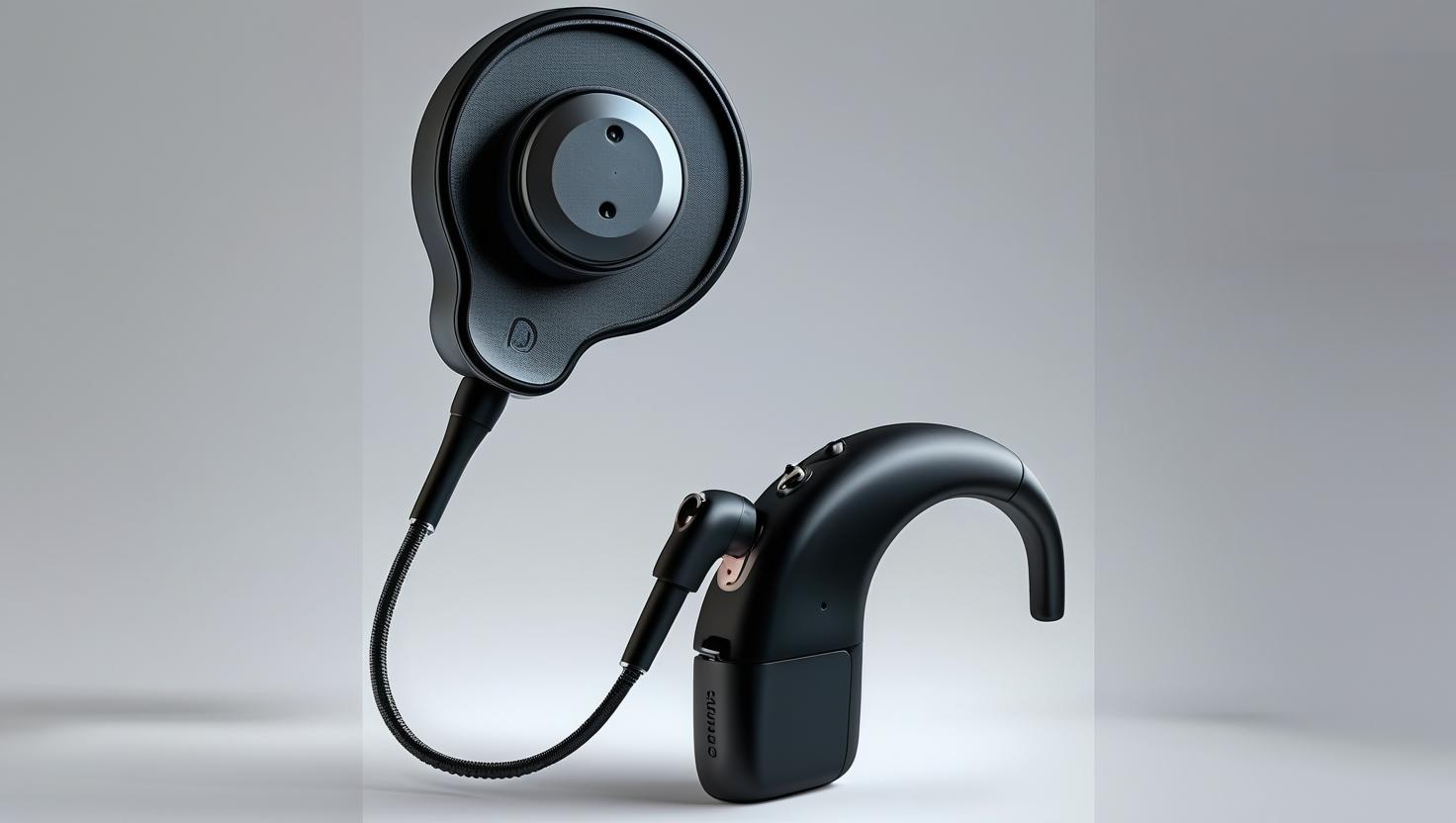
Cochlear implants, first implanted in 1961, restore hearing for those with profound deafness by directly stimulating the auditory nerve, bypassing damaged ear structures. Unlike hearing aids, these devices convert sound into electrical signals, with an external processor and internal implant working together. Modern implants support speech recognition in noisy environments and can stream audio from smartphones. Over 700,000 people worldwide, including children as young as 6 months, have received cochlear implants, transforming communication and quality of life.
The 13 sections, in brief
Short summaries of each section. The full lessons, images and quizzes are in the Platform.
Overview
A woman of fifty-four sits in a clinic three weeks after her operation. An audiologist connects a processor to a laptop and switches it on for the first time. She has been profoundly deaf for eleven years. She hears a series of flat, electronic beeps. Then somebody speaks and what arrives is not a voice.
Operations
Follow the sound. Every stage explains a design decision. It starts at a microphone on a processor worn behind the ear, or in a single unit worn on the head. Sometimes two microphones, because two allow directional processing. Then the signal is filtered into channels. The processor splits the incoming sound into frequency bands, one for each electrode.
Importance
The first argument is about what this device made possible for adults. Before it, profound deafness in an adult was permanent and untreatable. Hearing aids amplify. If the hair cells are gone, amplification has nothing to work with, and a louder signal delivered to a dead cochlea is simply louder silence.
Physics
Physics Involved in the Cochlear implant Device: Concept 1, Signal Acquisition, Sound Processing Pathway and Electrode Stimulation Architecture A cochlear implant is an electro-neural transduction system that converts acoustic vibrations into precisely coded electrical impulses delivered directly to the auditory nerve fibers inside the cochlea.
Features
The electrode array, and what the cochlea gives you for free Start here, because the anatomy does something no engineering could. The cochlea is organised by frequency along its length. High frequencies at the base, near the entrance. Low frequencies toward the apex, at the far end of the spiral.
Applications
The population with the best and most predictable outcomes, and the reason is neurological rather than surgical. Their auditory cortex already knows what speech is. It has years of experience of language, of voices, of what a sentence sounds like. Which means the brain is not learning to hear. It is learning to map a degraded new code onto templates it already has.
Physiology
What is being replaced, so the scale is clear The normal cochlea is worth describing properly, because the comparison is the whole story. Sound vibrates the eardrum, the bones of the middle ear transmit it to the cochlea, and a travelling wave moves along the basilar membrane inside.
Safety
Three categories, and they operate on completely different timescales. Surgical risks, concentrated in one operation next to the facial nerve. Device risks, spread across decades of an implant sitting in somebody's head. And a lifelong infection risk that most recipients and most non-specialist clinicians do not know exists.
Advancements
Forget release years. This device has a shape and it is unusual: the big gains came from signal processing rather than from hardware, and they stopped coming about two decades ago. Somebody stimulated an auditory nerve electrically and the patient perceived sound. Crude, and it established the principle that the nerve could be driven directly.
In Research
Two adults. Same degree of deafness, same duration, same device, same surgeon, same programming team. One achieves telephone conversation within six months. The other never achieves open-set speech understanding at all. Known factors, duration of deafness, age, residual hearing, explain only a modest fraction of the difference in outcomes. The majority of the variance is unexplained after decades of research.
Logistics
An engineer who understands this device is useful. An engineer who understands that the implant is a fraction of the cost and the programme is the product understands what is actually being bought. The implant is permanent and the external processor is not. It is a wearable electronic device on a child's head that gets dropped, soaked, lost and outgrown, and it is replaced every few years for life.
Alternatives
An alternative is not a competing product. It is another way of answering the clinical question, and here the question is not the one people assume. It is not "how do we make this person hear." It is: this person needs access to language and to other people. What is the best route to that?
Ethical
Every other device in this library treats a condition everybody agrees is a problem. A substantial part of the Deaf community does not regard deafness as a disability to be fixed. They regard it as the defining characteristic of a linguistic and cultural minority with its own languages, its own literature, its own schools, its own history and its own communities.
Previous: Cerebrospinal Fluid (CSF) Shunt System. Next: Colonoscope. All 69 devices.
Learn it properly, inside the Platform
22 courses, the 69-device library with 13 sections per device, BMEssentials and BMEssence guides and MedTech AI. Start with a 7-day free trial, no card.
Start the 7-day free trial