
BMEssentia Platform / Device library / Cryotherapy Machine
Device library
Cryotherapy Machine
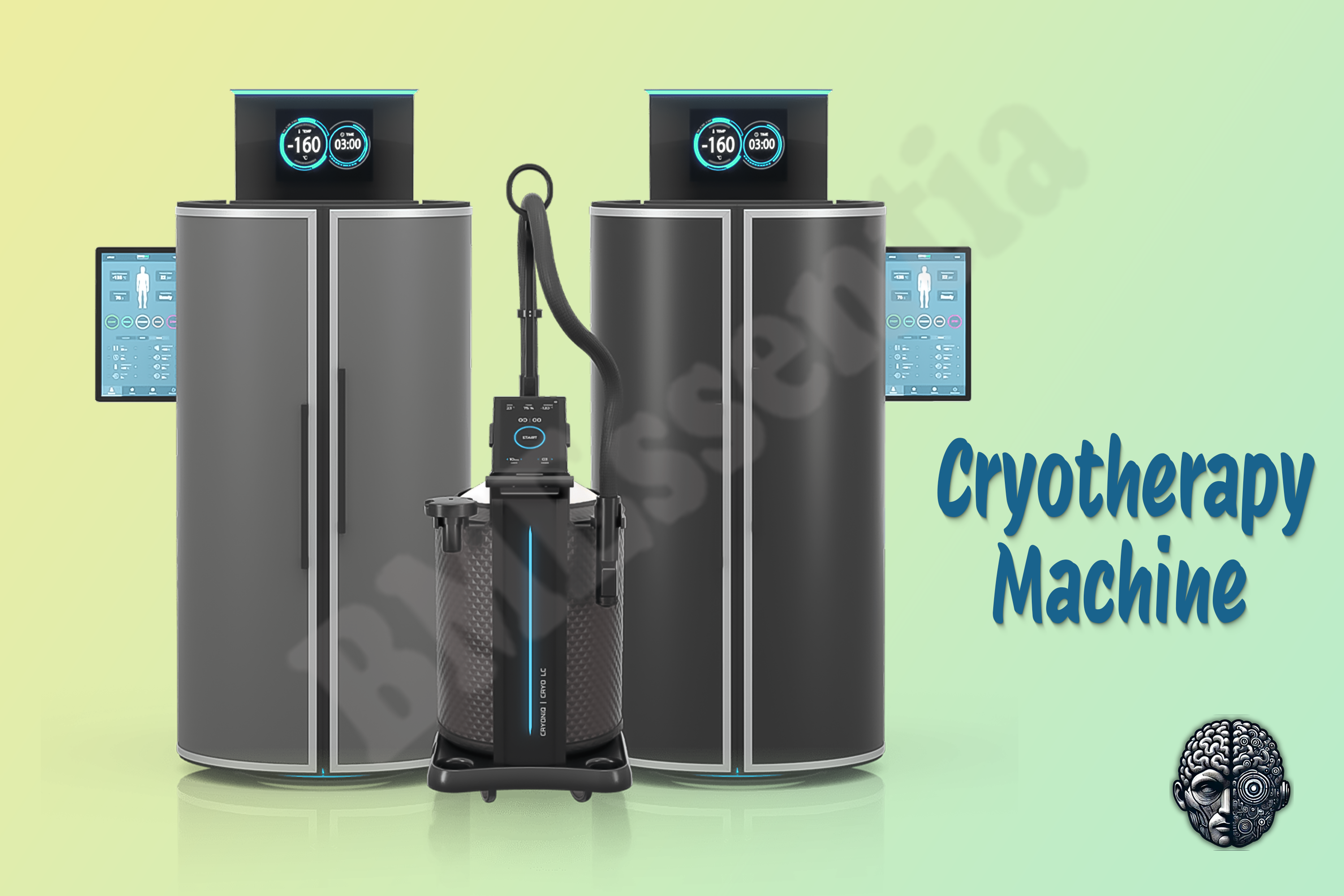
A cryotherapy machine delivers controlled extreme cold (-110°C to -140°C) to the body for therapeutic benefits, using either nitrogen vapor or electric cooling systems. Whole-body cryotherapy chambers treat conditions like inflammation, muscle recovery and chronic pain through brief 2-3 minute exposures that trigger physiological responses. Localized devices target specific areas with precise cold application for dermatological treatments or post-injury rehabilitation. Modern units feature adjustable temperature settings, automated safety timers and integrated oxygen monitors to ensure patient wellbeing. The technology is widely used in sports medicine, rheumatology and wellness centers to.
The 13 sections, in brief
Short summaries of each section. The full lessons, images and quizzes are in the Platform.
Overview
A man is lying on a scanner table with a needle in his kidney. Not a big needle. Something close to the width of a pen refill. Gas is running through it, and at the tip of that needle a ball of ice is growing inside him. The radiologist watches it spread on the scan, second by second, and the edge of the ice is visible as a clean dark line moving outward through the tissue.
Operations
A thin probe is placed into the target, usually through the skin, guided by imaging. Sometimes several probes are used together, because one probe makes a small ice ball and a larger tumour needs the zones to overlap. Then the cooling starts, and the mechanism is a neat piece of physics. High-pressure argon gas is forced through a narrow opening inside the tip.
Importance
The main argument is the patients this reaches. A kidney tumour in an eighty-year-old with heart failure, kidney impairment and previous surgery is a problem with no good answer. Removing it means an operation and a general anaesthetic that may be more dangerous than the cancer. Leaving it means watching it grow. A needle under sedation, day case, is a third option that did not exist before.
Physics
Physics involved in the Cryotherapy Machine: Concept 1, Cryogenic Energy Transfer, Ice-Front Dynamics, and Controlled Tissue Freezing The Cryotherapy Machine is a biomedical device that harnesses the destructive power of cold to treat pathological tissue, typically tumors, arrhythmogenic foci, or hyperplastic growths, through precisely targeted freezing.
Features
Worth building properly because it is the whole cooling system. Force a high-pressure gas through a narrow opening into a lower-pressure space and its temperature changes. For most gases at room temperature, it gets colder. You have felt this. Press the valve on an aerosol can and the can gets cold in your hand. Same effect.
Applications
Small kidney cancers are found by accident all the time, on scans done for something else. Many of them are in older patients with other problems: heart disease, poor kidney function, previous surgery. Removing part of a kidney is a real operation with a general anaesthetic, and in that patient the operation may be more dangerous than the tumour.
Physiology
Freezing does not kill a cell in one way. It kills it in several, at different temperatures, at different moments, and knowing which is which explains every rule in this device. And the most important fact is this: the freezing does about half the damage. The thawing does the rest, and the tissue keeps dying for days afterwards from something that has nothing to do with ice at all.
Safety
Two kinds of problem here, and they arrive at different times. Things that go wrong during the procedure, which are mostly about the needle and the ice going somewhere it should not. And things that go wrong afterwards, which are about a large amount of dead tissue sitting inside somebody.
Advancements
Four movements, and the shape is straightforward. Cold was applied to the surface. Liquid nitrogen on skin lesions. Effective, uncontrolled, and limited to what you could reach. Somebody tried it inside, through open surgery. Large probes, liquid nitrogen, a chest or abdomen opened to get to the target. It worked and the surgery it required removed most of the benefit.
In Research
Everything unresolved in this device comes back to one thing. Nobody can see where the tissue actually died. The operator watches the ice, the ice edge is at zero degrees, and the lethal line is somewhere inside it that nothing on the screen shows. Every recurrence, every argument about margins, every disagreement about how long to freeze, comes back to a boundary nobody can see.
Logistics
A modest console, expensive single-use probes, and a gas supply. The probes are the business, and the number used per case is not fixed. A small tumour takes one or two. A larger one takes four or five. Which means the revenue from a case depends on how difficult it was, and the person deciding how many probes to use is the same person who wants the treatment to work.
Alternatives
The goal is to destroy a tumour, not to freeze one. Which puts this device in a crowded field. Several methods destroy tissue through a needle, surgery removes it entirely, and radiotherapy does it without touching the patient. Cold is one option among several, and the honest position is that the choice is frequently made on what the department owns.
Ethical
The thing that makes this device different Most cancer treatments end with somebody knowing whether they worked. Surgery produces a specimen. A pathologist examines it and reports whether the margins were clear. Ablation produces nothing. The dead tumour stays inside the patient, nobody can check the margins, and the answer arrives on a scan a year later.
Previous: Cranial Drill System. Next: Defibrillators and their various types. All 69 devices.
Learn it properly, inside the Platform
22 courses, the 69-device library with 13 sections per device, BMEssentials and BMEssence guides and MedTech AI. Start with a 7-day free trial, no card.
Start the 7-day free trial