
BMEssentia Platform / Device library / Esophageal Manometry System
Device library
Esophageal Manometry System
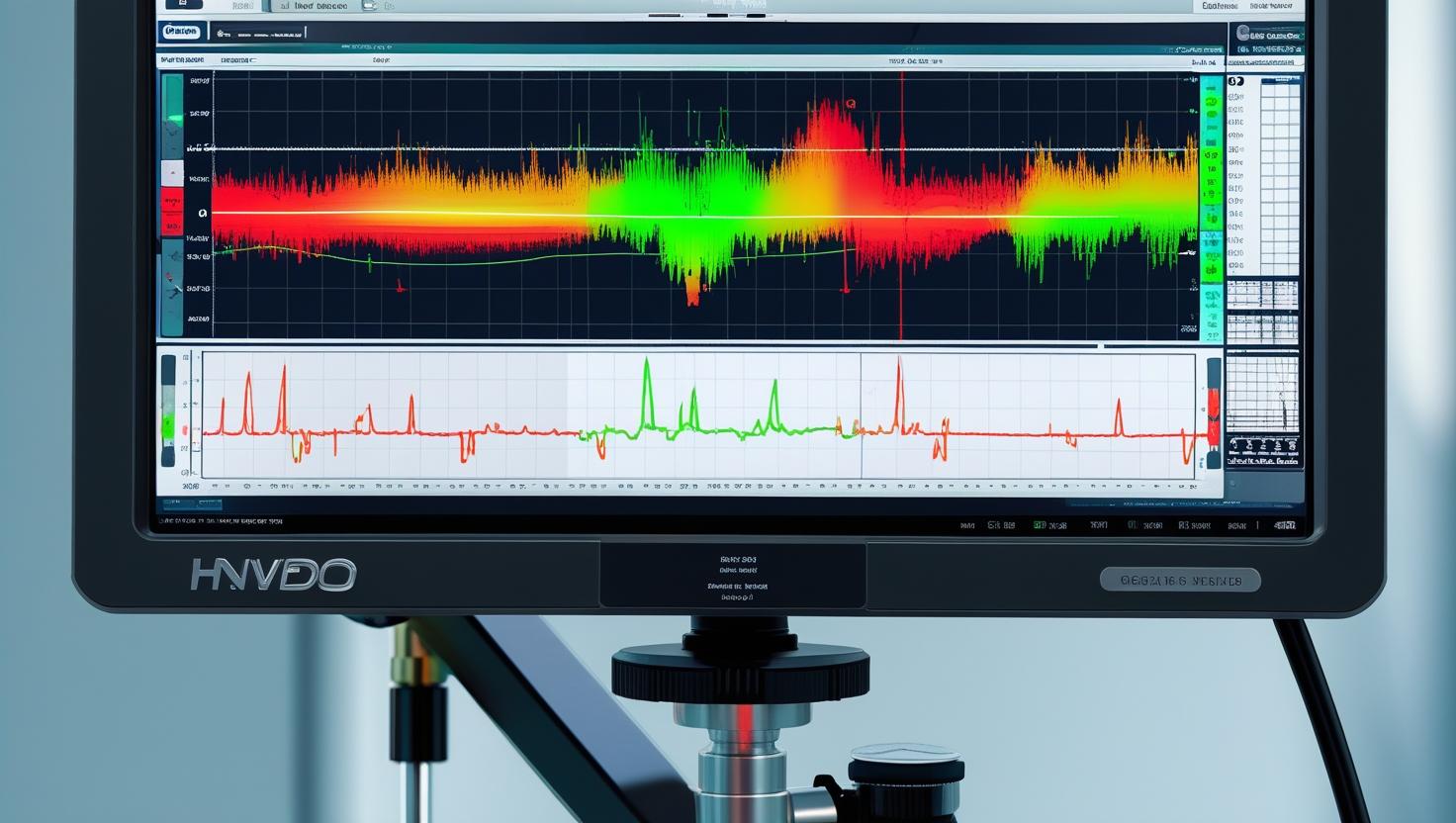
The esophageal manometry system is a diagnostic tool that measures muscle contractions and pressure patterns in the esophagus using a thin, flexible catheter with pressure sensors. It helps evaluate swallowing disorders, acid reflux, and achalasia by providing real-time data on esophageal motility. Modern high-resolution systems create detailed color-coded pressure maps, replacing traditional line tracings for clearer interpretation. This procedure is considered the gold standard for diagnosing esophageal motility disorders. Advanced versions now incorporate 3D pressure topography and impedance monitoring to assess both movement and bolus transit. With improved patient comfort features.
The 13 sections, in brief
Short summaries of each section. The full lessons, images and quizzes are in the Platform.
Overview
A woman of forty-one has been bringing food back up for three years. Not vomiting. It simply comes back, undigested, sometimes hours later, sometimes in the night onto her pillow. She has lost eleven kilograms. She has had two endoscopies. Both normal. She has had a barium swallow reported as showing some slowing.
Operations
Follow the catheter, then follow the swallow. It starts with preparation. Nothing to eat for several hours. Medications that affect esophageal muscle are stopped beforehand, because several common drugs alter motility enough to change the diagnosis.
Importance
The first argument is about a diagnosis that cannot be made any other way. Achalasia is a failure of the lower esophageal valve to relax, combined with loss of contraction in the esophageal body, and it is defined manometrically. Endoscopy is normal in a large proportion of cases, because the scope pushes through the closed valve without resistance and the lining is unremarkable.
Physics
Physics Involved in the Esophageal Manometry System: Concept 1, Pressure Sensing and Transduction along the Esophageal Axi The esophageal manometry system is a precision instrument that transforms invisible muscle contractions into quantifiable waves of pressure and time.
Features
Start here, because the sensor spacing is what defines the device. A small number of sensors spaced several centimetres apart, which could not cover the whole esophagus simultaneously. Which required the pull-through technique: positioning the catheter, recording, withdrawing it a centimetre, recording again, and assembling a picture from separate segments recorded at different times on different swallows.
Applications
Every use of this device is one of four things. Diagnosing achalasia. Preventing a surgeon from creating a swallowing disorder. Explaining a symptom nobody else could explain. Or positioning a different test. The first two account for most of the clinical value.
Physiology
How a swallow is organised, why the esophagus has two different kinds of muscle, how the wave knows which direction to travel, why the lower valve stays shut, and what goes wrong when the inhibitory nerves die. A voluntary phase, where the tongue moves the bolus backward.
Safety
This is a physically low-risk test with a small number of real complications and one large diagnostic hazard. The dangerous error is not a complication of the procedure, it is accepting a diagnosis of achalasia in somebody who has a tumour.
Advancements
Forget release years. This device has an unusual shape: the measurement barely changed, and the field was transformed by putting sensors closer together, drawing the result as a picture, and agreeing what the picture means. Somebody measured pressure inside a swallowing esophagus with balloons on a tube, establishing that the organ generates a travelling wave and that it can fail.
In Research
A precise classification of conditions whose significance is uncertain This field has done something most have not: it built a rigorous, reproducible, internationally agreed classification and then kept testing whether its categories were real.
Logistics
An engineer who understands this device is useful. An engineer who understands that the catheter costs a substantial fraction of the system and wears out understands what is actually being sold.
Alternatives
An alternative is not a competing product. It is another way of answering the clinical question, and here the division is unusually clean. For what the esophagus looks like, everything else is better. For what the esophagus does, almost nothing competes.
Ethical
This device exists to give a physical explanation to people who have been told they do not have one. The typical achalasia patient arrives having been investigated repeatedly, told their endoscopy was normal, treated for reflux that did not respond, and at some point told that stress or anxiety is the likely cause. They have frequently lost weight, stopped eating in public, and begun to doubt themselves.
Previous: Endoscopes. Next: Extracorporeal Shock Wave Lithotripter. All 69 devices.
Learn it properly, inside the Platform
22 courses, the 69-device library with 13 sections per device, BMEssentials and BMEssence guides and MedTech AI. Start with a 7-day free trial, no card.
Start the 7-day free trial