
BMEssentia Platform / Device library / Extracorporeal Shock Wave Lithotripter
Device library
Extracorporeal Shock Wave Lithotripter
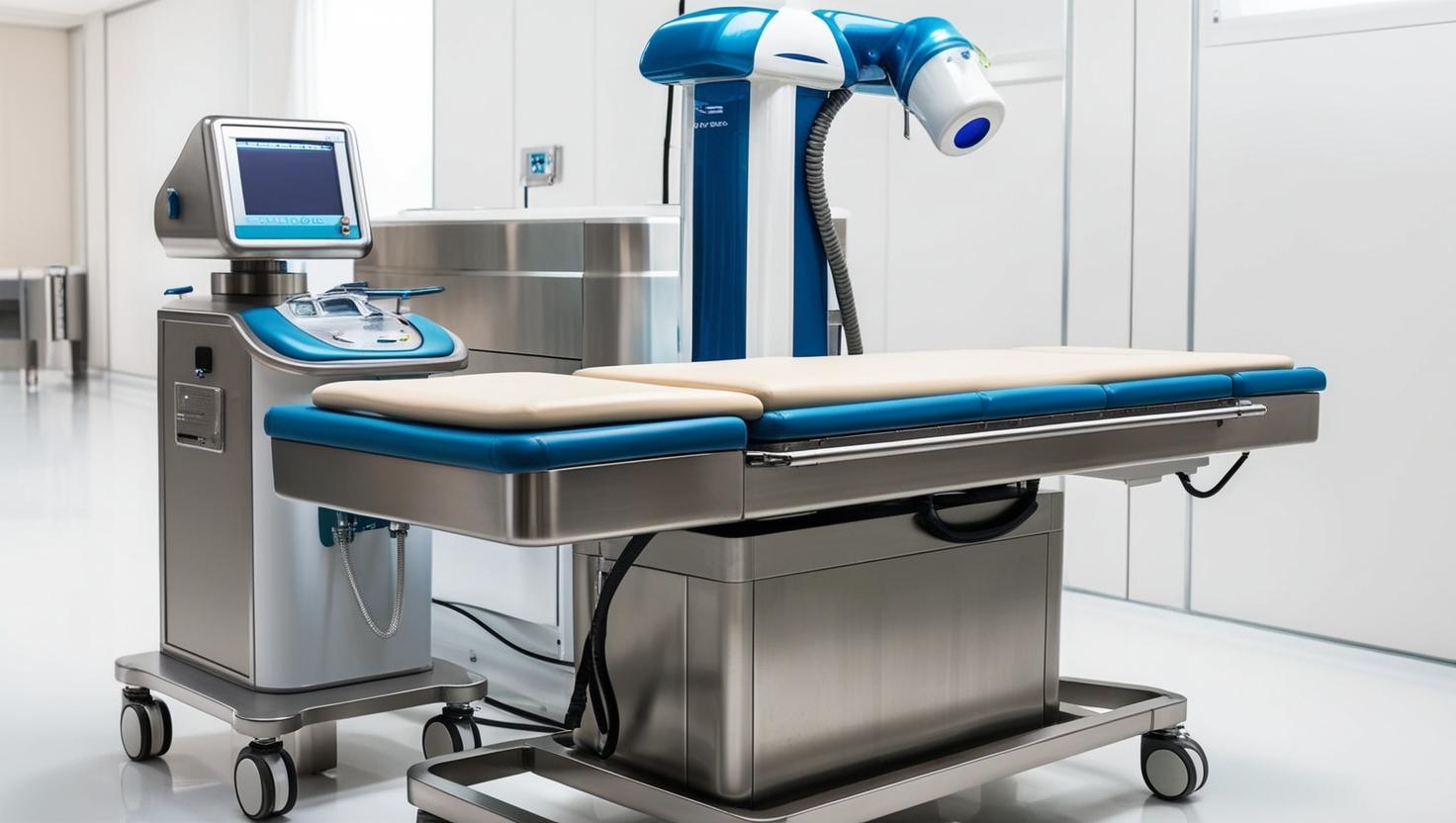
The Extracorporeal Shock Wave Lithotripter is a non-invasive medical device that uses high-energy shock waves to break down kidney stones and gallstones. It enables precise treatment, promoting faster recovery without surgery.
The 13 sections, in brief
Short summaries of each section. The full lessons, images and quizzes are in the Platform.
Overview
Full Name of the Device: Extracorporeal Shock Wave Lithotripter (ESWL) Alternate Names: Shock Wave Lithotripsy Device, Stone Fragmentation Device, Stone Breaker Extracorporeal Shock Wave Lithotripsy (ESWL): A non-invasive medical procedure using shock waves to fragment kidney, bladder, or ureteral stones.
Operations
The lithotripter works by using focused shock waves to break up kidney stones into smaller, passable fragments. Shock waves are high-energy sound waves that can be generated externally and focused on a specific point inside the body. When these waves strike the stone, they cause it to break apart due to the sudden increase in pressure at the stone's surface.
Importance
Non-Invasive Treatment for Kidney Stones: Lithotripsy represents a significant advancement in the treatment of kidney stones because it is non-invasive, meaning no incisions or invasive procedures are required. This eliminates the need for traditional surgery, reducing recovery time, minimizing complications, and lowering the risk of infection.
Physics
Physics Involved in the Extracorporeal shockwave lithotripter device: Concept 1, Shockwave Generation and Stone Fragmentation The Extracorporeal Shockwave Lithotripter (ESWL) is a precision-engineered therapeutic device that uses focused acoustic shockwaves to break kidney, ureteric, or bladder stones into minute fragments small enough to be excreted naturally.
Features
Targeted Shock Wave Technology: One of the most critical features of a lithotripter is its ability to focus shock waves precisely on the kidney stone while minimizing damage to surrounding tissues. This precision is achieved through advanced imaging techniques (ultrasound or X-ray) that allow real-time visualization of the stone's location.
Applications
Working Premise and Procedure (Step-by-Step) Step 1: Pre-Procedure Preparation and Evaluation Before lithotripsy begins, the patient undergoes a thorough evaluation to determine if they are a suitable candidate for the procedure. Imaging Studies: The size, location, and composition of the kidney stone are evaluated using imaging techniques such as X-rays, ultrasound, or CT scans.
Physiology
Lithotripsy primarily targets the urinary system, specifically the kidneys, ureters, and bladder. Kidney stones, or renal calculi, form within the kidneys and can cause significant pain when they block the flow of urine or travel down the ureters. Kidneys: The kidneys filter blood to remove waste products and excess fluids, which are then excreted as urine.
Safety
Start here: the machine has never been the main danger It would be reasonable to assume the safety story of a surgical robot is about the robot malfunctioning. It is not. Hardware faults happen, they are logged, and the overwhelming majority are recoverable.
Advancements
High-Precision Imaging for Stone Targeting: Modern lithotripters are increasingly equipped with advanced imaging technologies, such as 3D ultrasound or digital fluoroscopy, to improve the precision of shock wave targeting. These technologies allow healthcare providers to visualize the stone in real-time and adjust the focus of the shock waves as needed.
In Research
The Device in Research and Specialized Applications Kidney Stone Research: Lithotripsy plays a crucial role in clinical research on kidney stones and their treatment. Researchers use lithotripsy to study how different types of stones respond to shock waves, evaluating factors such as stone density, composition, and size.
Logistics
Dual-Technology Lithotripters: Newer lithotripters combine shock wave lithotripsy with laser lithotripsy or ultrasound lithotripsy to enhance the stone-breaking process. These dual-technology systems allow for greater versatility in treating different types of stones, including those that may not respond well to traditional shock waves.
Alternatives
Ureteroscopy: Ureteroscopy is a minimally invasive procedure in which a thin scope is inserted into the urinary tract to directly visualize and remove or fragment the stone. Unlike lithotripsy, which uses external shock waves, ureteroscopy involves the use of a laser to break up the stone.
Ethical
Ethical Considerations and Future Directions Access to Lithotripsy in Low-Resource Settings: While lithotripsy is widely available in many parts of the world, access to this advanced technology is limited in low-resource settings. Providing affordable and portable lithotripsy devices could improve access to care for patients in these regions, reducing the need for more invasive and costly treatments.
Previous: Esophageal Manometry System. Next: Fetal Monitor. All 69 devices.
Learn it properly, inside the Platform
22 courses, the 69-device library with 13 sections per device, BMEssentials and BMEssence guides and MedTech AI. Start with a 7-day free trial, no card.
Start the 7-day free trial