
BMEssentia Platform / Device library / Glucometer
Device library
Glucometer
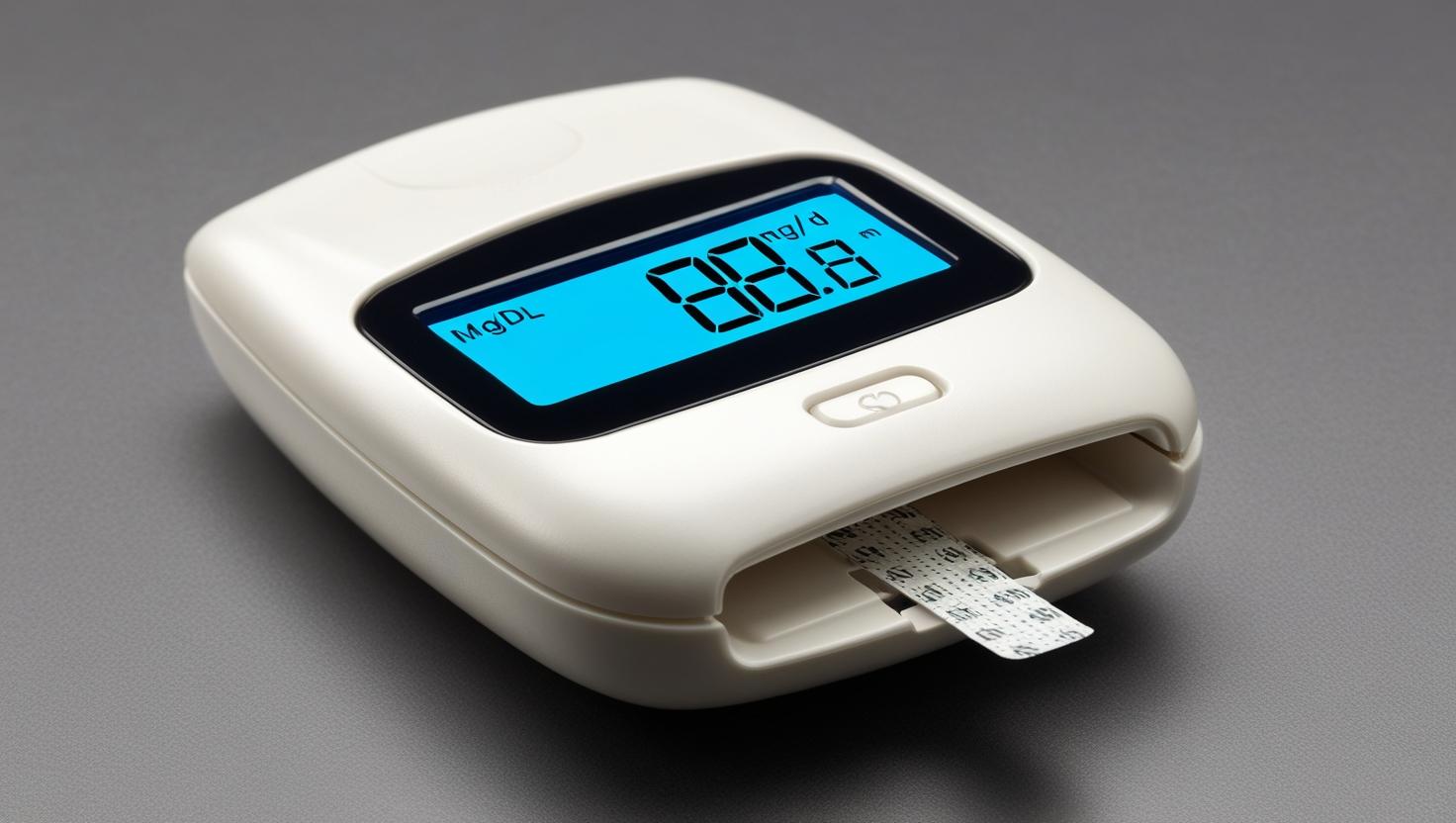
A glucometer is a portable medical device that measures blood glucose levels through a small blood sample, typically obtained via finger prick. These compact, battery-operated units provide diabetics with immediate glucose readings using test strips containing glucose oxidase enzymes. Modern versions feature Bluetooth connectivity to sync data with smartphones and cloud platforms for long-term trend analysis. Advanced models now incorporate alternative site testing and require smaller blood samples (as little as 0.3 microliters). Some newer systems offer spoken results for visually impaired users and pre-/post-meal markers for better diabetes management. As essential tools for daily.
The 13 sections, in brief
Short summaries of each section. The full lessons, images and quizzes are in the Platform.
Overview
It is half past two in the morning. A girl of nine with type 1 diabetes is asleep in her bedroom. Her mother is standing over her in the dark, holding a small grey meter the size of a matchbox. She pricks the side of her daughter's fingertip with a spring-loaded needle. A drop of blood, smaller than a lentil, wells up. She touches the end of a thin plastic strip to it. The meter counts down for five seconds.
Operations
Follow a single drop of blood from the fingertip to the number on the screen. It starts with clean hands. The patient washes and dries their hands. Sugar from fruit, sweets or juice on the skin can raise the reading dramatically, and wet skin can dilute the drop.
Importance
The first argument is about insulin, which is one of the most dangerous drugs people give themselves at home. People with type 1 diabetes cannot make insulin and must inject or pump it several times a day for life. Too little, and glucose climbs, leading over hours to a dangerous build-up of acid in the blood.
Physics
Physics Involved in the Glucometer Device: Concept 1, Principle of Electrochemical Glucose Measurement in Glucometers A glucometer is a compact analytical device that measures the concentration of glucose in a tiny droplet of blood using controlled chemical and electrical reactions.
Features
Start here, because this is where the measurement actually happens. A tiny chamber at the tip, holding a fraction of a microlitre of blood. A dried layer of enzyme and chemicals coating the chamber. Printed electrodes that carry current to contacts at the other end, where the strip plugs into the meter.
Applications
Every use of this device is one of four things. Deciding an insulin dose. Catching a dangerous low before it becomes an emergency. Understanding patterns over days and weeks. Or checking somebody who is unwell right now. The first two happen in homes every day, and they are where this device saves the most lives.
Physiology
How the body holds glucose in a narrow range, why the brain depends on it, what happens when insulin is missing, what happens when glucose falls, why different samples give different numbers, and how high glucose damages the body over years. Start here, because the meter measures one moment in a balancing act that never stops.
Safety
The needle is tiny and the device is simple. The danger lies almost entirely in acting on a wrong number. A glucometer error rarely announces itself, because a wrong reading looks exactly like a right one. A falsely high reading leads to extra insulin and a dangerous low. A falsely low reading leads to sugar given to somebody already high, or to a missed emergency.
Advancements
Forget release years. This device has a clear shape: it moved glucose measurement out of the laboratory, into the patient's own hands, and then slowly out of the finger and under the skin. Glucose was first judged in urine, which only showed that glucose had been high some hours earlier and said nothing about lows.
In Research
The most used measuring device in the world, run by people who were never trained to use it Laboratory accuracy of meters is tested carefully before they are sold. What is far less known is how accurate readings are in real life, in real homes and wards, with real hands, real strips and real storage. Laboratory tests use fresh strips, trained staff and ideal conditions.
Logistics
An engineer who understands this device is useful. An engineer who understands that the meter is almost free and the strips are the business understands what is actually being sold. Meters are often given away by pharmacies, clinics and manufacturers, because each meter works only with its own strips, and a person using insulin may use several strips a day for the rest of their life.
Alternatives
An alternative is not a competing product. It is another way of answering the clinical question, and here the question depends on timing. Is the question what glucose is right now, how it is changing, or how it has been over months? What it is. Blood sent to a laboratory for measurement.
Ethical
This device puts medical decisions into the hands of patients, families and children. A parent at three in the morning deciding whether to wake a child, a teenager deciding an insulin dose before a party, and an older person living alone deciding whether a low is serious enough to call for help are all making medical decisions based on this device.
Previous: Fetal Monitor. Next: Hemodialysis Machine and peritoneal dialysis machine. All 69 devices.
Learn it properly, inside the Platform
22 courses, the 69-device library with 13 sections per device, BMEssentials and BMEssence guides and MedTech AI. Start with a 7-day free trial, no card.
Start the 7-day free trial