
BMEssentia Platform / Device library / Nebulizer
Device library
Nebulizer
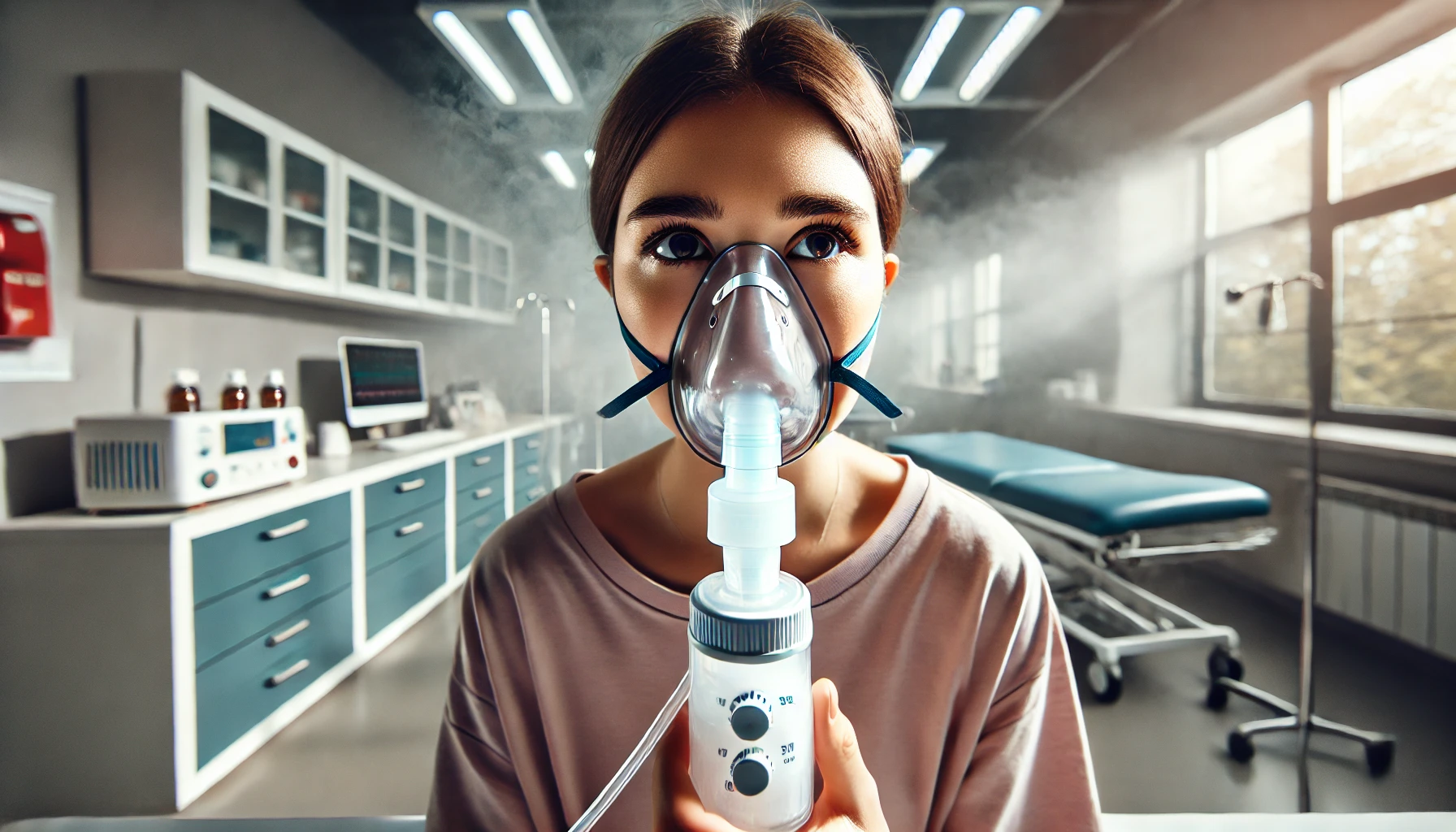
The nebulizer, a device that turns liquid medicine into a fine mist for easy inhalation, was first developed in the mid-1800s and became widely used in the early 20th century to treat respiratory conditions like asthma and COPD. Modern nebulizers come in three main types: jet (using compressed air), ultrasonic (using high-frequency vibrations), and mesh (with tiny vibrating holes for precise dosing). They are especially helpful for children, elderly patients, and those with severe breathing difficulties who struggle with inhalers. Some smart nebulizers now track usage and sync data to smartphones for better asthma management. The word "nebulizer" comes from the Latin *nebula*, meaning.
The 13 sections, in brief
Short summaries of each section. The full lessons, images and quizzes are in the Platform.
Overview
It is three in the morning in a children's emergency department. A boy of six is sitting on his mother's lap, leaning forward with his hands on his knees. He is breathing fast and shallow. The muscles in his neck pull in with every breath, and the skin between his ribs sucks inward. He has asthma, and tonight it has closed his airways tighter than his inhaler at home could open them.
Operations
Follow the medicine from the liquid in the cup to the lining of the smallest airways. It starts with the liquid. A measured dose of drug, often mixed with saline, is poured into a small cup called the chamber or reservoir. The volume matters. Too little, and much of it sits below the level the device can reach. Too much, and treatment takes longer than the patient will tolerate.
Importance
The first argument is about rescue when breathing fails. Some patients are too breathless to use an inhaler. In a severe asthma attack or a flare of chronic lung disease, a patient may not be able to take a slow, deep breath or hold it. Children in distress cannot coordinate a puff. Confused or exhausted adults cannot follow instructions.
Physics
Physics Involved in the Nebulizer Device: Concept 1, Principle of Aerosol Generation and Particle Delivery in a Nebulizer Device A nebulizer is a biomedical device that turns a liquid medication into a fine mist of aerosol particles small enough to reach deep into the lungs.
Features
The jet, which tears liquid apart with moving gas The jet nebuliser is the oldest and most common design, and it works using nothing but moving gas. Try this. Hold a drinking straw upright in a glass of water. Blow hard across the top of it with a second straw. Water climbs the first straw and sprays out in a fine mist. You have built a jet nebuliser.
Applications
Every use of this device is one of four things. Rescuing a patient too breathless to use an inhaler. Delivering drugs that exist only as liquids or in large doses. Treating people who cannot coordinate an inhaler at all. And sustaining long-term therapy for chronic lung disease at home.
Physiology
The airways are a branching maze built to keep particles out. Droplet size decides where in that maze a droplet lands. The way a patient breathes decides how much arrives at all. Disease sends drug to the wrong places. Once a drug lands, the body starts clearing and absorbing it. And the gas that drives the mist acts on breathing itself.
Safety
The nebuliser looks like the gentlest device in the hospital, and that is exactly why its dangers are missed. Most harm from nebulisers comes from things nobody associates with a harmless mist. The gas driving it can stop a patient breathing. The chamber can grow bacteria. The mist can carry infection to staff. A home machine can convince a family to stay at home during a life-threatening attack.
Advancements
Forget release years. This device has an unusual shape: for most of its history it tried to make more mist, and its most important progress came when it learned to waste less and to admit when a simpler tool was better. Breathing steam, smoke and vapour, the oldest inhaled remedies, with no control over dose or droplet size.
In Research
Nobody knows how much of each nebulised dose reaches the lungs of a real patient Nebulisers are tested in laboratories with breathing simulators, steady flows and perfect seals. Patients are nothing like that. They cry, pant, cough, breathe through their noses, hold masks loosely and have airways narrowed by disease.
Logistics
An engineer who understands this device is useful. An engineer who understands that the nebuliser in the box is the cheapest part of the treatment, and that handsets, masks, filters, compressor service and drug-device pairing are what keep it working and safe, understands what is actually being delivered.
Alternatives
Every alternative here is a different route to the same place. An alternative is not a competing product. It is another way of answering the clinical question, and here the question is: how do we get the right drug to the right part of this patient's airways, quickly and safely, given how well they can breathe and what the drug needs?
Ethical
The nebuliser treats one patient, and its mist reaches everyone else in the room. It is used on the most breathless, the youngest and the frailest. These patients cannot choose their device, check its gas or clean it themselves. Other people make those choices for them.
Previous: Mechanical Ventilators. Next: Ophthalmoscope. All 69 devices.
Learn it properly, inside the Platform
22 courses, the 69-device library with 13 sections per device, BMEssentials and BMEssence guides and MedTech AI. Start with a 7-day free trial, no card.
Start the 7-day free trial