
BMEssentia Platform / Device library / Otoscope
Device library
Otoscope
The otoscope, a handheld tool doctors use to examine ears, has been around since the 14th century-but early versions were simply funnels with candlelight! Modern otoscopes use bright LED lights and magnifying lenses to detect infections, blockages, or eardrum damage. Pediatricians perform over 12 million ear exams yearly in the U.S. alone, as ear infections are the most common reason for childhood doctor visits. Some high-tech digital otoscopes now capture video of the ear canal and share images with specialists instantly. The name comes from Greek ("oto" for ear + "scope" to look), and astronauts even use special otoscopes in space to monitor zero-gravity's effects on ear pressure. This.
The 13 sections, in brief
Short summaries of each section. The full lessons, images and quizzes are in the Platform.
Overview
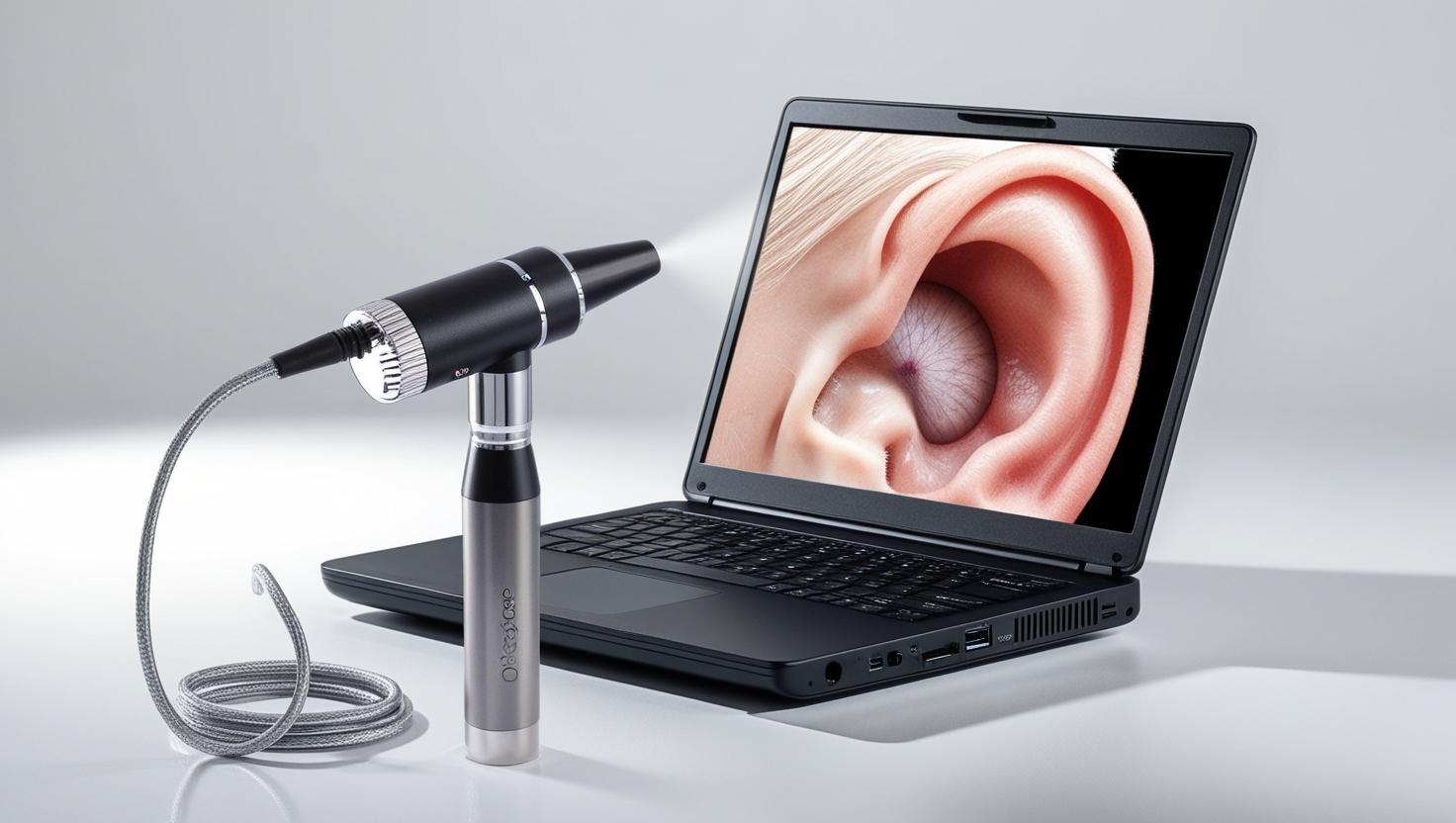
Digital Otoscope: A modern type of otoscope that captures high-definition images and videos of the ear canal and eardrum, projecting real-time images onto a screen for enhanced diagnosis and patient education. Video Otoscopy: A feature in advanced otoscopes enabling live video streaming of ear examinations, useful for recording procedures and facilitating telemedicine consultations.
Operations
The otoscope works by illuminating and magnifying the structures of the outer ear and eardrum, allowing for a clear, detailed examination. Light Source: The otoscope includes a built-in light (either an LED or halogen bulb) that shines into the dark ear canal, illuminating it for examination.
Importance
• Diagnostic Accuracy: The otoscope plays a vital role in diagnosing ear-related conditions. Without it, many common ear diseases, such as otitis media (middle ear infection), otitis externa (outer ear infection), and eardrum perforations, would be difficult to detect. For instance, in cases of otitis media, the eardrum might appear red, bulging, or cloudy due to fluid buildup behind the membrane.
Physics
Concept 1, Visualization System and Optical Pathway Design in the Otoscope The otoscope is a precision optical instrument designed to let a clinician look inside one of the smallest and most complex passages in the body, the external auditory canal that leads to the eardrum.
Features
• Digital Otoscopes: One of the most significant advancements in otoscope technology is the digital otoscope, which allows physicians to capture high-definition images and videos of the ear canal and eardrum. These otoscopes are equipped with small cameras that can project real-time images onto a screen, providing a detailed view for both the physician and the patient.
Applications
Before using an otoscope, the physician ensures that the patient is seated comfortably and understands the procedure. In cases where the patient is a child or is anxious about the exam, the physician may explain the steps to reduce apprehension. For pediatric patients, parents are often involved in holding the child steady.
Physiology
Outer and Middle Ear Structures Seen with an Otoscope The otoscope is used to examine the structures of the outer and middle ear, which are involved in hearing and balance: • Outer Ear: The outer ear consists of the pinna (external ear) and the ear canal (external auditory canal). The otoscope allows for the visualization of the ear canal, which channels sound waves toward the eardrum.
Safety
Safety Considerations When Using an Otoscope While the otoscope is a non-invasive device, there are still important safety considerations: • Proper Insertion: The speculum must be inserted gently to avoid causing pain or injury to the ear canal or eardrum. In pediatric patients, whose ear canals are more sensitive and narrower, extra care must be taken to prevent discomfort.
Advancements
• AI-Assisted Otoscopy: Advances in artificial intelligence (AI) have begun to integrate with otoscopic technologies, allowing AI-assisted otoscopes to analyze ear images in real-time and provide diagnostic suggestions. These smart otoscopes can help inexperienced clinicians make more accurate diagnoses and reduce human error.
In Research
• Research in Pediatric Ear Infections: Otoscopes have been integral in research studies focusing on the high prevalence of ear infections in children. Researchers use otoscopic data to study patterns of otitis media in different age groups, exploring how environmental factors, such as daycare attendance or exposure to secondhand smoke, affect the incidence of ear infections.
Logistics
• Smartphone Integration: Newer otoscope models can connect directly to smartphones, allowing healthcare providers to use apps to store, analyze, and share ear examination data. This trend is particularly popular in telemedicine and remote consultations, where the physician can review the images and provide a diagnosis without the patient needing to visit the clinic.
Alternatives
• Otoendoscopy: Otoendoscopes, which are more specialized than otoscopes, provide a deeper and more detailed view of the ear canal and eardrum. Otoendoscopy is typically used in ENT practices and is particularly useful for surgical planning, as it offers a more comprehensive view of the middle ear.
Ethical
• AI-Driven Otoscopy: The integration of artificial intelligence in otoscopic examination holds great potential. AI-driven otoscopes may soon become common in clinical practice, assisting doctors by providing real-time analysis of eardrum and ear canal images. This could improve diagnostic accuracy, especially in busy clinics or telemedicine settings where the provider might not have ENT specialization.
Previous: Orthopedic Implants. Next: Percutaneous Nephrolithotomy (PCNL) System. All 69 devices.
Learn it properly, inside the Platform
22 courses, the 69-device library with 13 sections per device, BMEssentials and BMEssence guides and MedTech AI. Start with a 7-day free trial, no card.
Start the 7-day free trial