
BMEssentia Platform / Device library / Prosthetic Limbs
Device library
Prosthetic Limbs
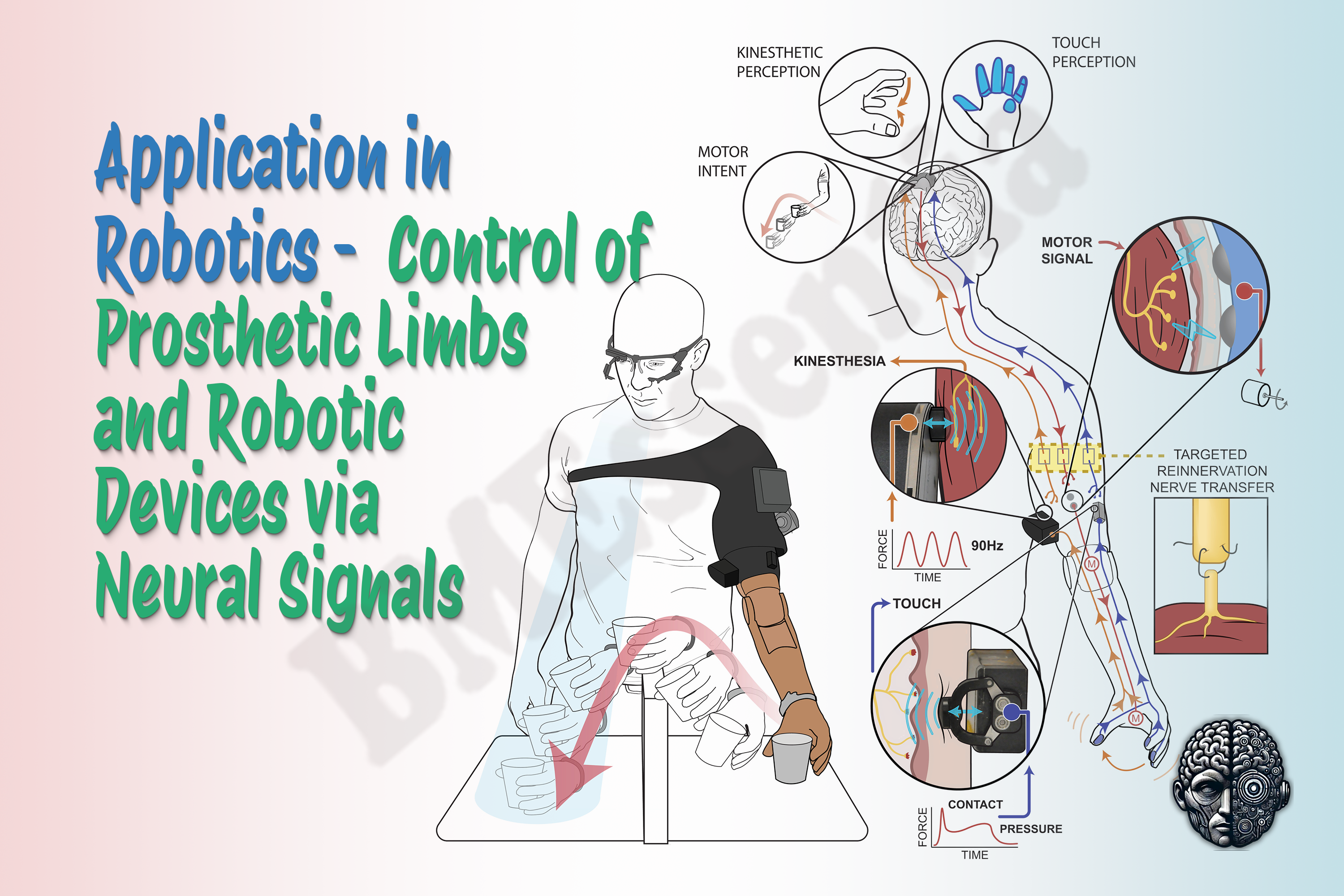
Prosthetic limbs are artificial devices designed to replace missing arms or legs, restoring mobility and functionality for amputees. Modern prosthetics utilize advanced materials like carbon fiber and titanium for lightweight durability, while myoelectric systems use muscle signals to control movement with precision. Microprocessor-controlled joints adapt to different terrains and activities, offering near-natural gait patterns for lower limb prostheses. 3D printing technology now enables customized, cost-effective designs tailored to individual anatomies and lifestyles. Cutting-edge research incorporates neural interfaces that allow direct brain control of prosthetic limbs. From basic.
The 13 sections, in brief
Short summaries of each section. The full lessons, images and quizzes are in the Platform.
Overview
A man loses his leg below the knee at thirty-four. Six months later he is walking on a carbon fibre foot that stores energy and returns it, and he walks well enough that people in the street do not notice. And he takes it off at seven in the evening because his skin hurts.
Operations
Follow the load, and this device explains itself. Start at the socket. A rigid or semi-rigid cup, custom made to the shape of that person's residual limb, into which the limb sits. Load enters here. Body weight travels from the skeleton, through the soft tissue of the residual limb, into the socket wall, and down into the prosthesis.
Importance
The first argument is about scale, and it is larger than people expect. Limb loss affects tens of millions of people worldwide, and the number is rising, driven almost entirely by diabetes and vascular disease rather than by trauma or conflict. Which makes this one of the largest disability categories on earth, and one of the most under-served: the majority of people who need a prosthesis do not have one.
Physics
Concept 1, Biomechanical Architecture and Energy Transfer Design in Modern Prosthetic Limbs A prosthetic limb is not a mechanical replacement for a missing limb, it is a dynamic biomechanical engine designed to capture, store, and re-release mechanical energy in perfect synchrony with the user's musculoskeletal system.
Features
Start here, because everything else is secondary. Take the full weight of a person, or the force of a grip, and transfer it through soft tissue into a rigid cup, without damaging the skin, thousands of times a day, for years. Not all of a residual limb can take pressure.
Applications
Amputation from diabetes and vascular disease The largest group by a wide margin, and the one that shapes everything about how these services should be run. Older. Frequently with heart disease, kidney disease and poor eyesight. Reduced sensation in the remaining foot, which is how the amputation happened in the first place.
Physiology
What the device does to the body: it loads skin that was never built for load, and it changes how the whole body moves. And what the body does to the device: it changes shape, it wastes muscle, it sweats, and it keeps insisting the missing limb is still there.
Safety
This device does not fail the way most devices in this library fail. Nothing alarms. Nothing stops. The harm arrives slowly through skin, through falls, and through a device that gets worn less and less until it is not worn at all. Which means the most dangerous failure here is the quiet one: a person who has stopped using their leg, sitting down more, and nobody has noticed.
Advancements
Forget release years. This field has a shape worth noticing: the components have improved enormously, the interface has barely moved, and the outcome that matters most has not changed. Prostheses were wood, leather and steel. Heavy, crude, and they got people upright.
In Research
A large proportion of prostheses are abandoned. For upper limb devices the rejection rate is high, and it rises with device complexity rather than falling. Which is the most important fact in this entire device and it points research in a direction the field mostly does not go.
Logistics
An engineer who understands these devices is useful. An engineer who understands that the components are shipped and the socket is made on site by a person understands what is actually being sold. A prosthetic leg is half a manufactured product and half a piece of custom fabrication. You can ship a knee and a foot anywhere.
Alternatives
An alternative is not a competing product. It is another way of answering the clinical question, and here the question is broader than it looks. This person is missing part of a limb. What gets them back to doing what they want to do? A prosthesis is one answer. It is not always the best one, and for a large number of people it is not the one they end up using.
Ethical
Most devices in this library are used on people who are ill. The people using these are not ill. They are missing part of a limb, and that is a different thing. Which raises the question that runs through this whole section. Is limb loss a medical problem to be fixed by a device, or is it a form of human variation that society mostly fails to accommodate? The answer decides what gets funded.
Previous: Positron Emission Mammography (PEM) Scanner. Next: Pulse Oximeter. All 69 devices.
Learn it properly, inside the Platform
22 courses, the 69-device library with 13 sections per device, BMEssentials and BMEssence guides and MedTech AI. Start with a 7-day free trial, no card.
Start the 7-day free trial