
BMEssentia Platform / Device library / Pulse Oximeter
Device library
Pulse Oximeter
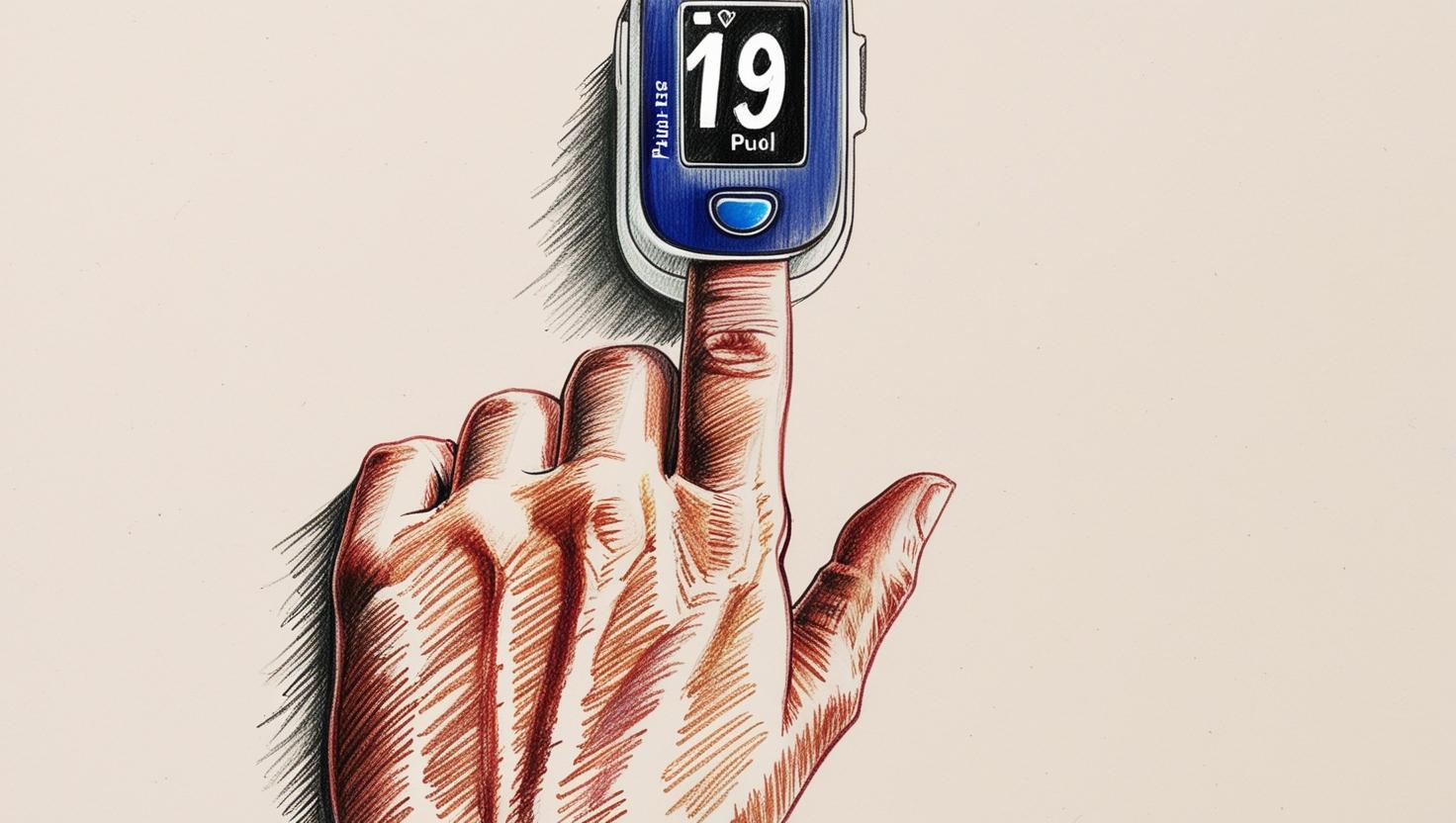
The pulse oximeter, a small device that clips onto your finger to measure blood oxygen levels, was first developed in the 1970s but didn't become widely used in hospitals until the 1980s. It works by shining two different wavelengths of light through your skin to detect how much oxygen your red blood cells are carrying-a normal reading is typically 95-100%. During the COVID-19 pandemic, pulse oximeters became household essentials, as silent drops in oxygen (called "happy hypoxia") could occur without obvious symptoms. Modern versions can now connect to smartphones, track trends over time, and even monitor heart rate. Surprisingly, this life-saving tool was inspired by early 20th-century.
The 13 sections, in brief
Short summaries of each section. The full lessons, images and quizzes are in the Platform.
Overview
It is three in the morning on an orthopaedic ward. A woman in her late sixties had her hip replaced yesterday. She has a button that gives her morphine when she presses it, and she has pressed it often, because the pain was bad. She has a thin tube in her nose giving her oxygen. On her finger is a small clip with a red glow.
Operations
Follow the light from the tiny lamp on one side of the finger to the number on the screen. It starts with two small lights inside the probe. One gives off red light. The other gives off infrared, which the eye cannot see. They switch on and off in turn, many times every second.
Importance
The first argument is about making the invisible visible. Before this device, the main sign of low oxygen was the colour of the patient. Blue lips, blue fingertips. That sign, called cyanosis, appears late. It is hard to see in poor light. It hides in anaemic patients, who may not have enough haemoglobin to turn visibly blue. And it is much harder to see in darker skin.
Physics
Physics Involved in the Pulse oximeter Device: Concept 1, Principle of Optical Oxygen Saturation Measurement A pulse oximeter measures how oxygen-rich your blood is by watching how light behaves inside a pulsating artery. It does not draw blood or analyze a sample, it listens to photons. Two tiny LEDs shine through tissue, one in red (~660 nm) and one in infrared (~940 nm).
Features
Two colours, because one colour cannot tell you anything The light passes through the finger and some of it is lost. Was it lost because the blood is poor in oxygen? Because the finger is thick? Because the skin is dark? Because there is more blood in the finger today? With one colour, every one of those explanations gives the same result. The device would have no way to tell them apart.
Applications
Every use of this device is one of four things. Catching a fall in oxygen while there is still time to act. Setting how much oxygen to give. Sorting who is sick from who is not. And watching a trend over hours, nights or months. The first is the one that saves the most lives in hospital. The third is the one that saves the most lives in the world.
Physiology
How haemoglobin carries oxygen and changes colour. Why the oxygen curve hides a cliff. Why oxygenation, breathing and delivery are three different things. How the pulse reaches the fingertip, and why it disappears. How light travels through living tissue. And what the body can do to fool the measurement.
Safety
The danger with this device is almost never what it does to the patient, but what it convinces people not to do. The oximeter's most common harm is false reassurance. A calm green number stops people looking more closely. It stops them counting breaths, feeling how cold a hand is, or asking for a blood gas. Almost every serious failure in this section is a failure of trust, not of hardware.
Advancements
Forget release years. This device has an unusual shape: one brilliant idea made it possible, decades of engineering made it reliable, and only much later did the field discover it had never been equally accurate for everyone. Oxygen judged by the colour of lips and fingers, late, unreliable and hardest to see in exactly the patients at most risk.
In Research
Nobody yet knows exactly how wrong this device is for each patient in front of them The pulse oximeter is used on more patients than almost any other monitor. It is studied constantly. Yet for a sick patient with dark skin, cold hands and a low saturation, nobody can say how far the reading is likely to be from the truth.
Logistics
An engineer who understands this device is useful. An engineer who understands that the same small clip is sold in two completely different worlds, one a cheap consumer gadget and one a regulated hospital monitoring system, which look alike and share almost nothing in accuracy, regulation or margin, understands what is actually being sold.
Alternatives
An alternative is not a competing product. It is another way of answering the clinical question, and here the question is: is this patient getting enough oxygen into their blood, is the blood getting it to the tissues, and is the patient breathing well enough to keep it that way?
Ethical
This device is cheap, simple and trusted, and every decision it touches is shaped by how accurately it reads each person. When a device is trusted by everyone, its errors become everyone's errors. Oxygen prescriptions, admissions, alarm responses and eligibility for treatment all flow from this number. If the number is wrong for some patients more than others, fairness is lost before any human makes a choice.
Previous: Prosthetic Limbs. Next: Retinal Laser Photocoagulation System. All 69 devices.
Learn it properly, inside the Platform
22 courses, the 69-device library with 13 sections per device, BMEssentials and BMEssence guides and MedTech AI. Start with a 7-day free trial, no card.
Start the 7-day free trial