
BMEssentia Platform / Device library / The Anesthesia Machine
Device library
The Anesthesia Machine
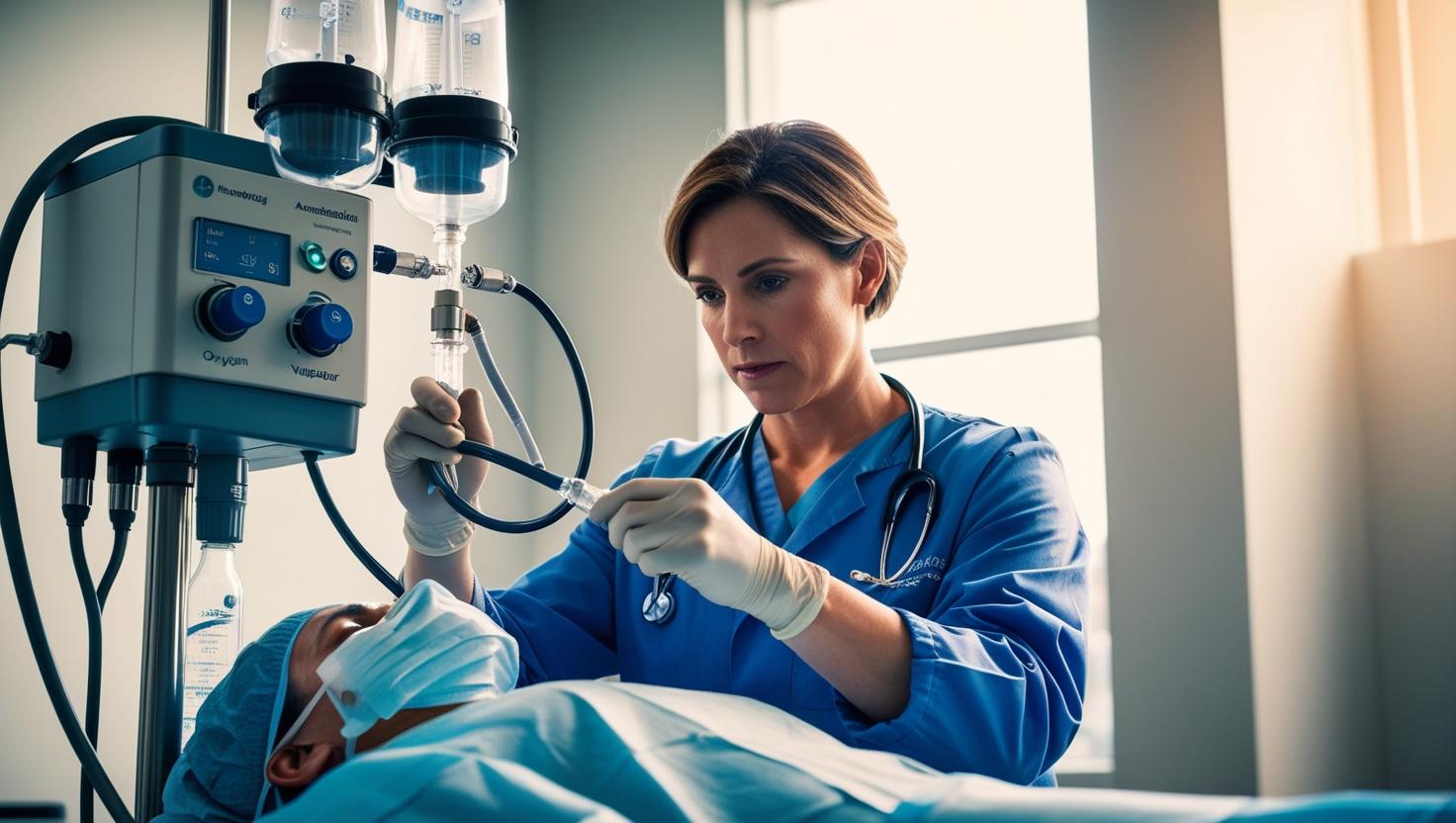
The anesthesia machine, first developed in the early 20th century, transformed surgery by delivering precise mixes of gases and anesthetics for safe patient sedation. Early models were simple gas cylinders with manual controls, but today's machines use advanced electronics to monitor vital signs and adjust dosages automatically. Modern systems can integrate with ventilators and even detect equipment malfunctions, ensuring patient safety during complex procedures. These machines have made surgeries safer and more accessible worldwide.
The 13 sections, in brief
Short summaries of each section. The full lessons, images and quizzes are in the Platform.
Overview
Somebody is lying on a table in a room full of people, and in about ninety seconds they will stop existing as a person. Not metaphorically.
Operations
Follow the gas and the machine explains itself. Oxygen, air and nitrous oxide arrive either from pipelines in the wall or from cylinders mounted on the back of the machine. They pass through pressure regulators that bring them down to a working pressure, then through flow control valves that the anesthetist sets, then into a common manifold where they mix.
Importance
The case for this machine is the case for surgery itself. Before reliable anesthesia, operations were limited to what could be completed in the time a conscious person could be held down. Amputations. Bladder stones. Superficial procedures.
Physics
Physics Involved in the Anesthesia Machine: The anesthesia machine begins its operation long before vapor, ventilation, or monitoring, it begins at the source of life itself: medical gases under pressure. Oxygen (O₂), nitrous oxide (N₂O), air, and sometimes helium or carbon dioxide are delivered to the machine through a dual-supply network: cylinders and pipeline systems.
Features
The gas supply, and the connector that cannot be wrong Start here, because the first safety feature in the chain is the shape of a piece of brass. Pipeline gas arrives from the hospital's central supply at working pressure. Oxygen, air, and nitrous oxide, delivered through the wall.
Applications
The three components, and why they are separated General anesthesia is not one thing. It is three, delivered by different drugs, needed in different amounts for different operations. Unconsciousness and amnesia. The patient is not present and will not remember.
Physiology
Most devices in this library respond to physiology. This one deliberately dismantles it, holds the patient in that dismantled state for hours, and then reassembles it. Which means this section is different from every other physiology section here. It is not about how the body affects the machine.
Safety
Most safety sections describe hazards that still exist. A large part of this one describes hazards that were eliminated. Not reduced. Eliminated, by hardware, because the specialty studied its deaths and built machines incapable of repeating them. This is the only device here where the safety story is largely a history of problems that were actually solved.
Advancements
Forget release years. The shape predicts direction, and this device has a shape that no other machine in the library has. A rag and a bottle. The earliest anesthesia was a volatile liquid poured onto cloth and held over a face. Concentration unknown, depth unmeasurable, oxygen supply whatever the room contained. It worked often enough to transform surgery and it killed people at a rate nobody tracked.
In Research
We give drugs to hundreds of millions of people every year that abolish consciousness. Not in the sense that the mechanism is complicated. In the sense that the question of how a small molecule produces the loss of subjective experience is genuinely open, and it sits on top of a deeper question that is arguably the hardest one in science.
Logistics
An engineer who understands this machine is useful. An engineer who understands that the machine is the cheapest thing in the theatre and the gas is a utility, the agent is a controlled pharmaceutical, and the vaporiser is a precision instrument that drifts understands what is actually being sold and supported.
Alternatives
An alternative is not a competing product. It is another way of achieving the clinical goal, and the goal here is not to anesthetise somebody. It is to allow an operation to happen on a person who will survive it and not remember it. Which reframes the section entirely, because the best alternatives to general anesthesia are not better anesthesia machines.
Ethical
Most ethical sections in this library concern what a device does to a patient. This one concerns something stranger, and it is worth naming precisely before anything else. A person hands their consciousness to a stranger and asks for it back afterwards. For a defined period they will not exist, will not remember, will not be able to consent to anything, withdraw consent from anything, or object to anything at all.
Previous: Surgical Stapler. Next: Thermometer. All 69 devices.
Learn it properly, inside the Platform
22 courses, the 69-device library with 13 sections per device, BMEssentials and BMEssence guides and MedTech AI. Start with a 7-day free trial, no card.
Start the 7-day free trial