
BMEssentia Platform / Device library / Vagus Nerve Stimulator (VNS)
Device library
Vagus Nerve Stimulator (VNS)
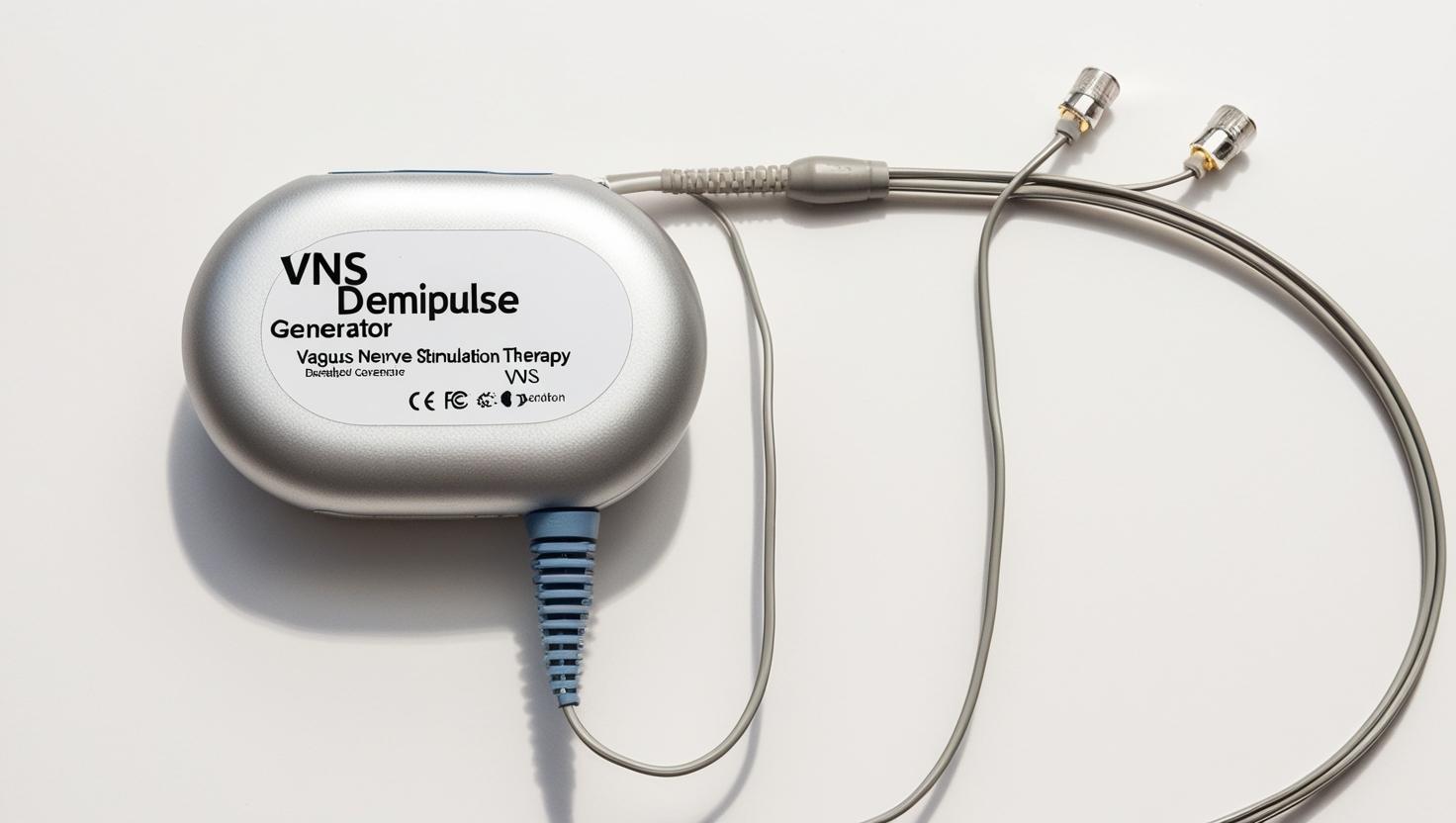
A Vagus Nerve Stimulator (VNS) is a small device implanted under the skin to deliver electrical pulses to the vagus nerve, which runs from the brain to the abdomen. It's commonly used to treat epilepsy and depression when other treatments don't work. The gentle stimulation helps regulate brain activity and reduce the frequency of seizures or mood disorders. Remarkably, the device works automatically but can also be activated by a handheld magnet when needed.
The 13 sections, in brief
Short summaries of each section. The full lessons, images and quizzes are in the Platform.
Overview
A boy of nineteen is having a seizure at a bus stop. He has been having them since he was eight. He has tried six drugs, sometimes four at once, and they have taken away his concentration, his balance and about forty percent of his seizures, which still leaves eleven a month.
Operations
It starts in a generator under the skin below the left collarbone, roughly the size of a large coin. Battery, capacitor, timing circuit, and telemetry. Mechanically it is a close relative of a pacemaker, and the resemblance is not coincidental: the field grew directly out of cardiac device engineering.
Importance
The first argument is about who this is for. Roughly a third of people with epilepsy are not controlled by drugs. That fraction has been stubbornly stable across decades and across every new drug introduced. Adding a seventh medication to somebody taking six changes almost nothing except the side effects.
Physics
1. Neurons are specialized cells that generate and transmit electrical signals. Every neuron maintains a voltage difference across its cell membrane - the inside of the cell is about -70 millivolts (mV) relative to the outside. This voltage difference, called the resting membrane potential, exists because of unequal distribution of ions (charged particles) across the membrane.
Features
The single most important piece of design in the device, and it is a shape rather than a circuit. An electrode has to maintain contact with a nerve for decades. The obvious solution is a cuff that encircles it. And a rigid cuff around a nerve is a slow disaster. The neck moves constantly. Tissue swells. Scar forms.
Applications
The founding indication and by far the largest. Failure of at least two appropriately chosen and adequately trialled antiseizure drugs, which is the accepted definition of drug resistance. And not a candidate for resective surgery, which is the essential second condition.
Physiology
This section carries more weight than usual, because the physiology is the only route to understanding a device whose mechanism is not settled. What the device does to the body: it activates a mixed nerve, producing effects on voice, breathing, heart and gut, and a therapeutic effect in the brain that nobody can fully explain.
Safety
Two categories, and they behave completely differently. Surgical risks, concentrated in a single operation in the neck, around structures that do not forgive. And stimulation effects, which are present every five minutes for the life of the device and which are experienced rather than suffered.
Advancements
Forget release years. This device has an unusual shape: the hardware has barely changed and the applications have multiplied, which is what happens when nobody understands the mechanism. Somebody noticed that stimulating the vagus changed brain electrical activity in animals. An observation with no obvious application, made while studying something else.
In Research
It has been implanted in hundreds of thousands of people, across decades, in two approved indications. Not "the mechanism is complex". Genuinely unresolved, with four competing explanations, all supported by some evidence, none established.
Logistics
An engineer who understands this device is useful. An engineer who understands that the implant is an hour and the therapy is two years of clinic appointments understands what is actually being sold. This device does not work when it is implanted. It works after eighteen months of gradual titration, which means twelve to twenty clinic visits, each requiring a programmer, a trained person, and an appointment slot.
Alternatives
An alternative is not a competing product. It is another way of answering the clinical question, and here the question has already been narrowed considerably before this device is considered. And the first answer, which is the one this section exists to protect, is that somebody should check whether surgery could cure this person before anybody implants anything.
Ethical
Most devices in this library raise ethical questions about risk, access or consent. This one raises a sharper one, and it is the question that should govern the whole section.
Previous: Urodynamic Testing System. Next: Vitrectomy Machine. All 69 devices.
Learn it properly, inside the Platform
22 courses, the 69-device library with 13 sections per device, BMEssentials and BMEssence guides and MedTech AI. Start with a 7-day free trial, no card.
Start the 7-day free trial